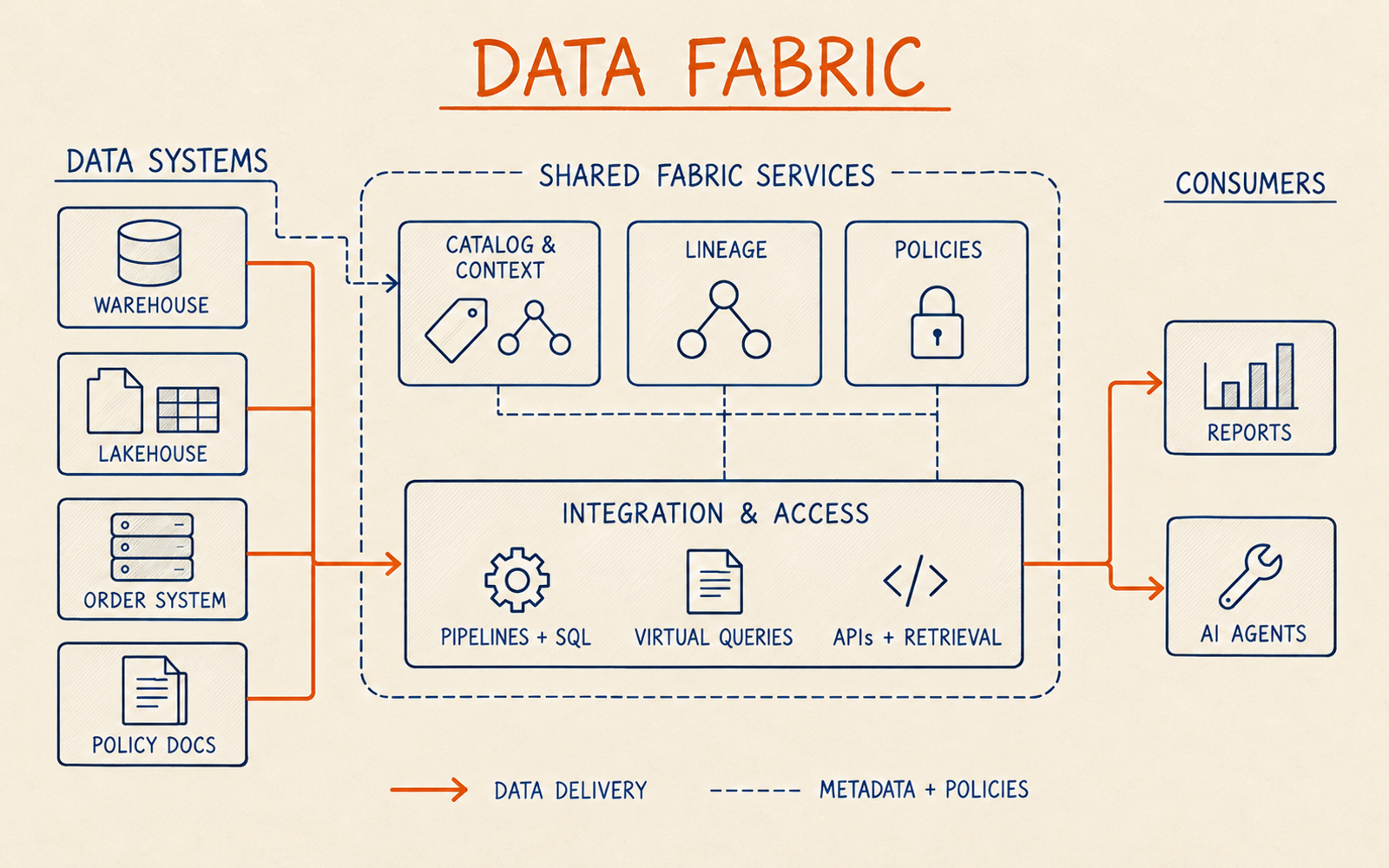
Data fabric: connecting data, context and access across systems
Explore data fabric architecture through MorrowBasket's reports and agents, and see how shared context and access controls support AI-ready data platforms.
Longer essays and technical guides on MLOps, data engineering, AI architecture, Azure and the platform concerns that tend to show up after the model finally works.
Explore data fabric architecture through MorrowBasket's reports and agents, and see how shared context and access controls support AI-ready data platforms.
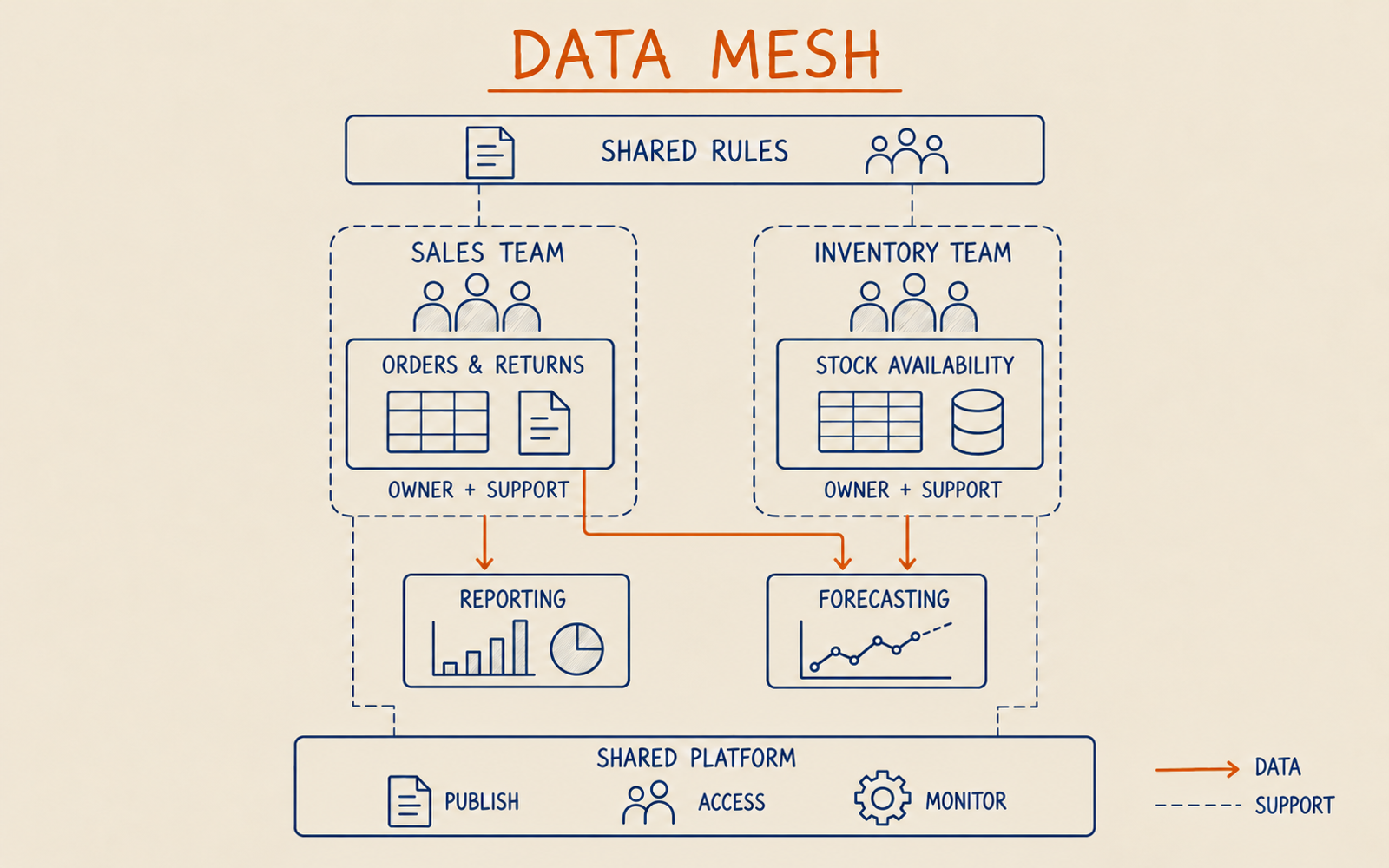
Explore data mesh through MorrowBasket's teams and learn how domain ownership, data products and shared governance support analytics and AI.
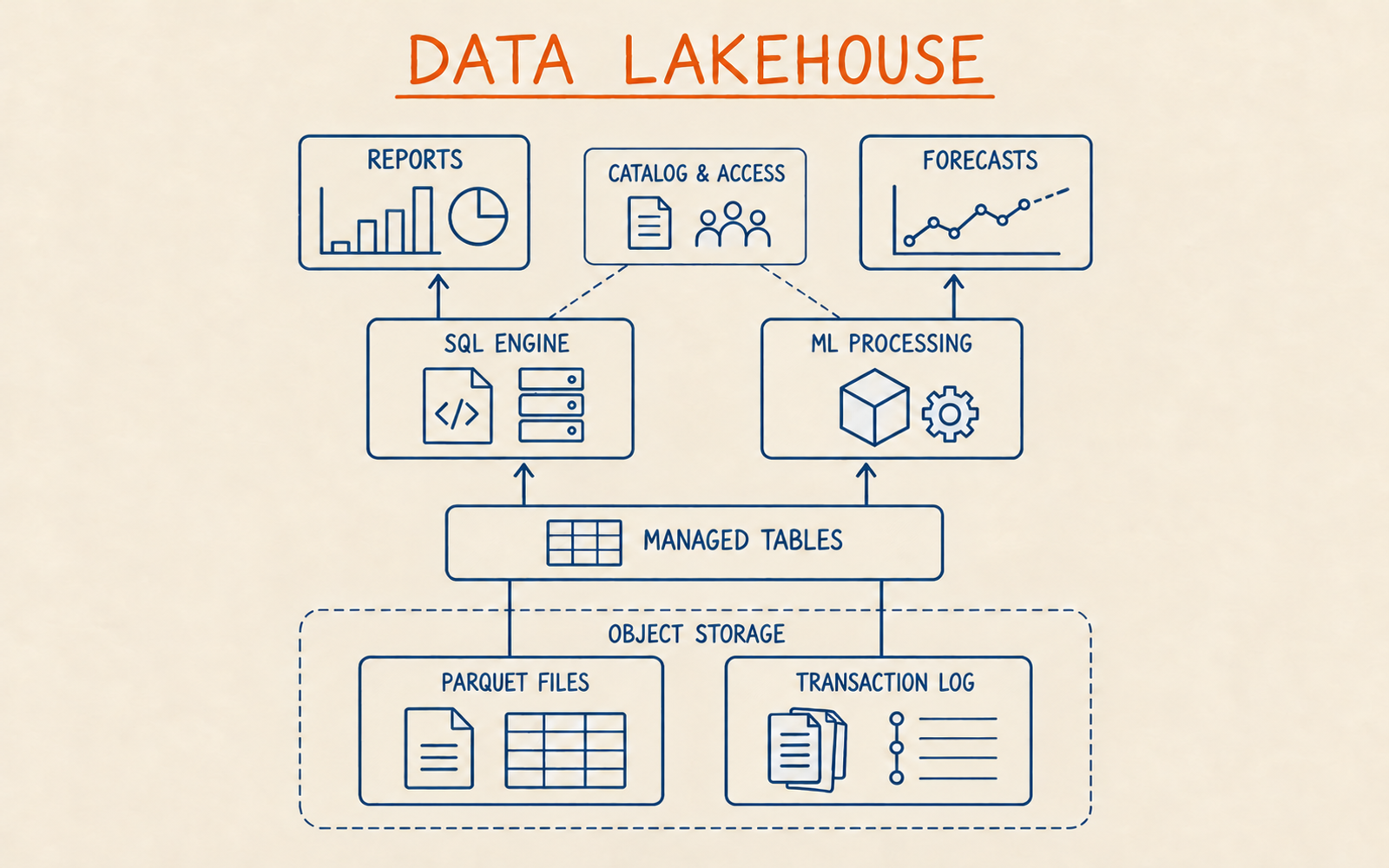
Explore how data lakehouse architecture adds reliable tables to a data lake, supports analytics and ML, and can replace a separate data warehouse.
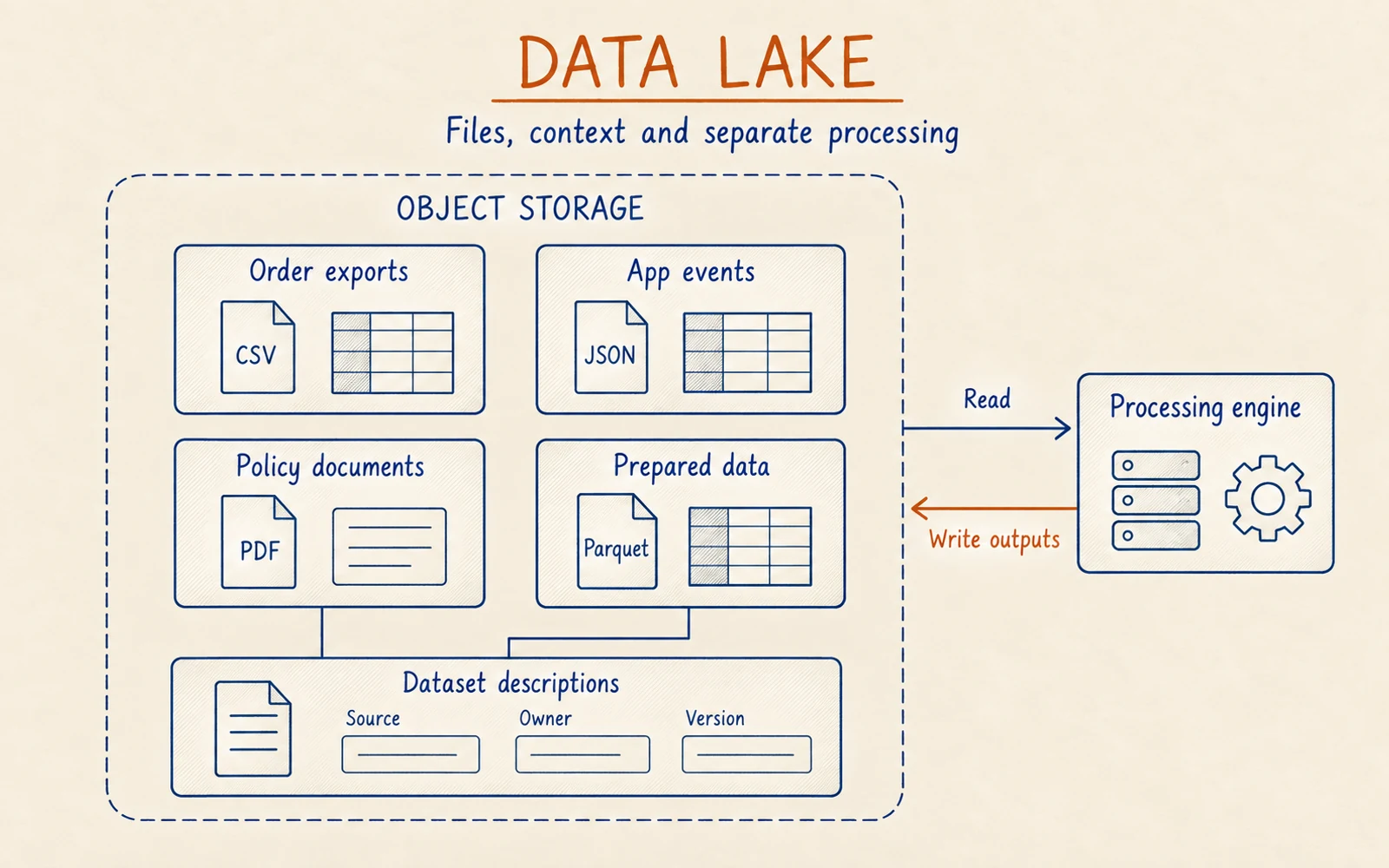
Explore data lake architecture through MorrowBasket's files, formats and processing, and learn what makes stored data useful for analytics and AI.
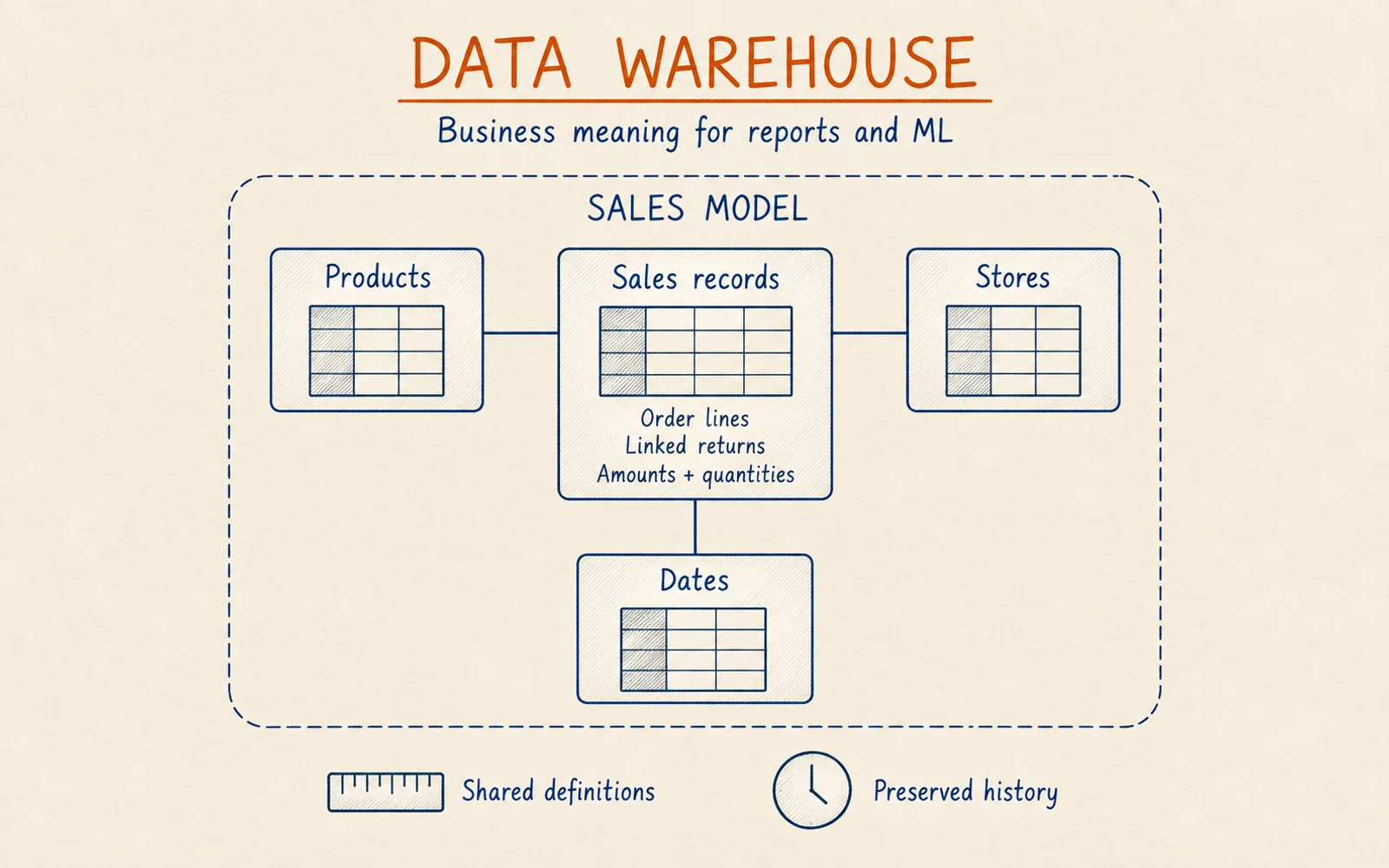
See how a data warehouse gives reports and AI consistent business data, where historical correctness matters, and when a warehouse is enough.
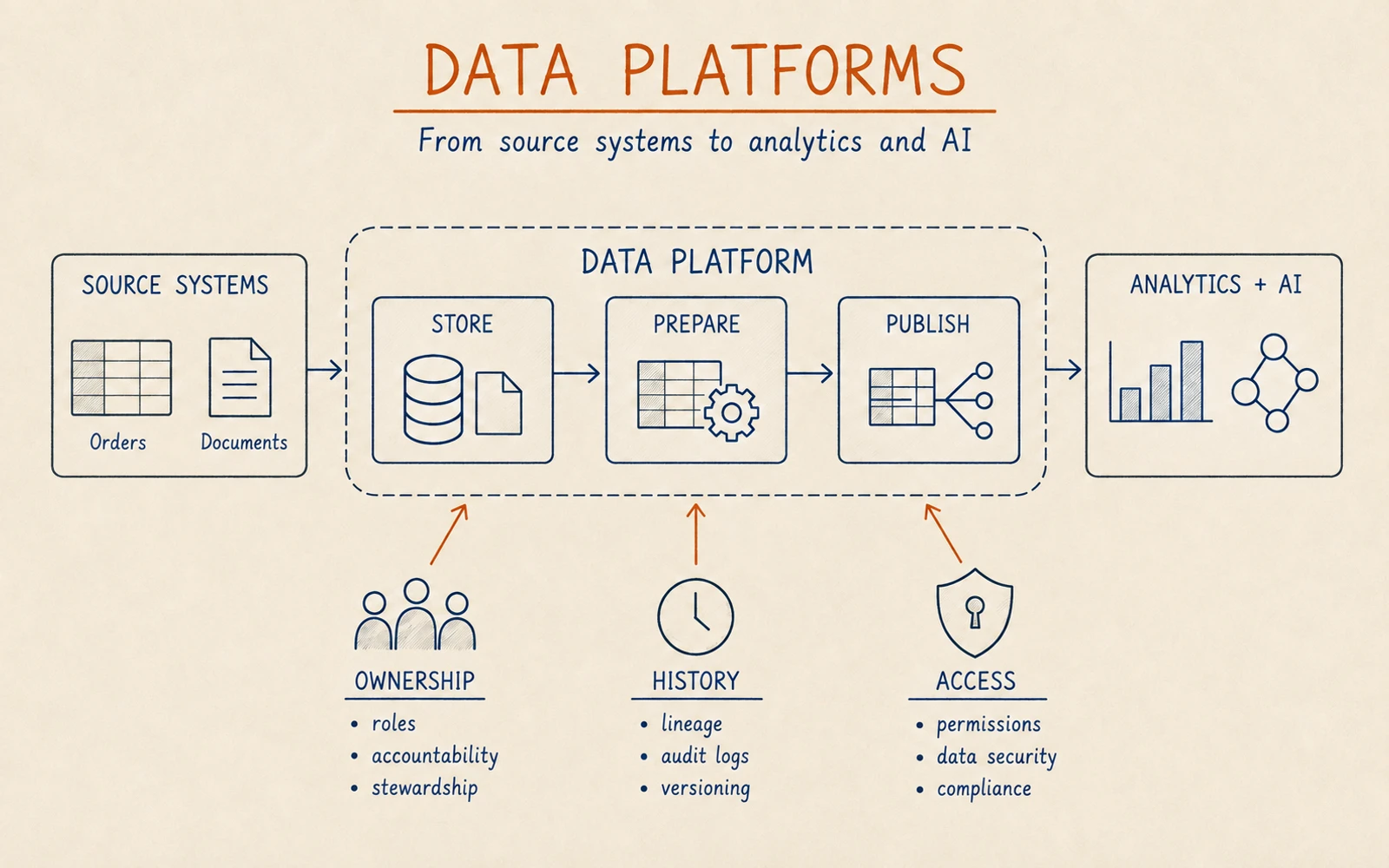
Understand warehouses, lakes, lakehouses, mesh and fabric through one business example, and learn what makes a data platform ready for AI.
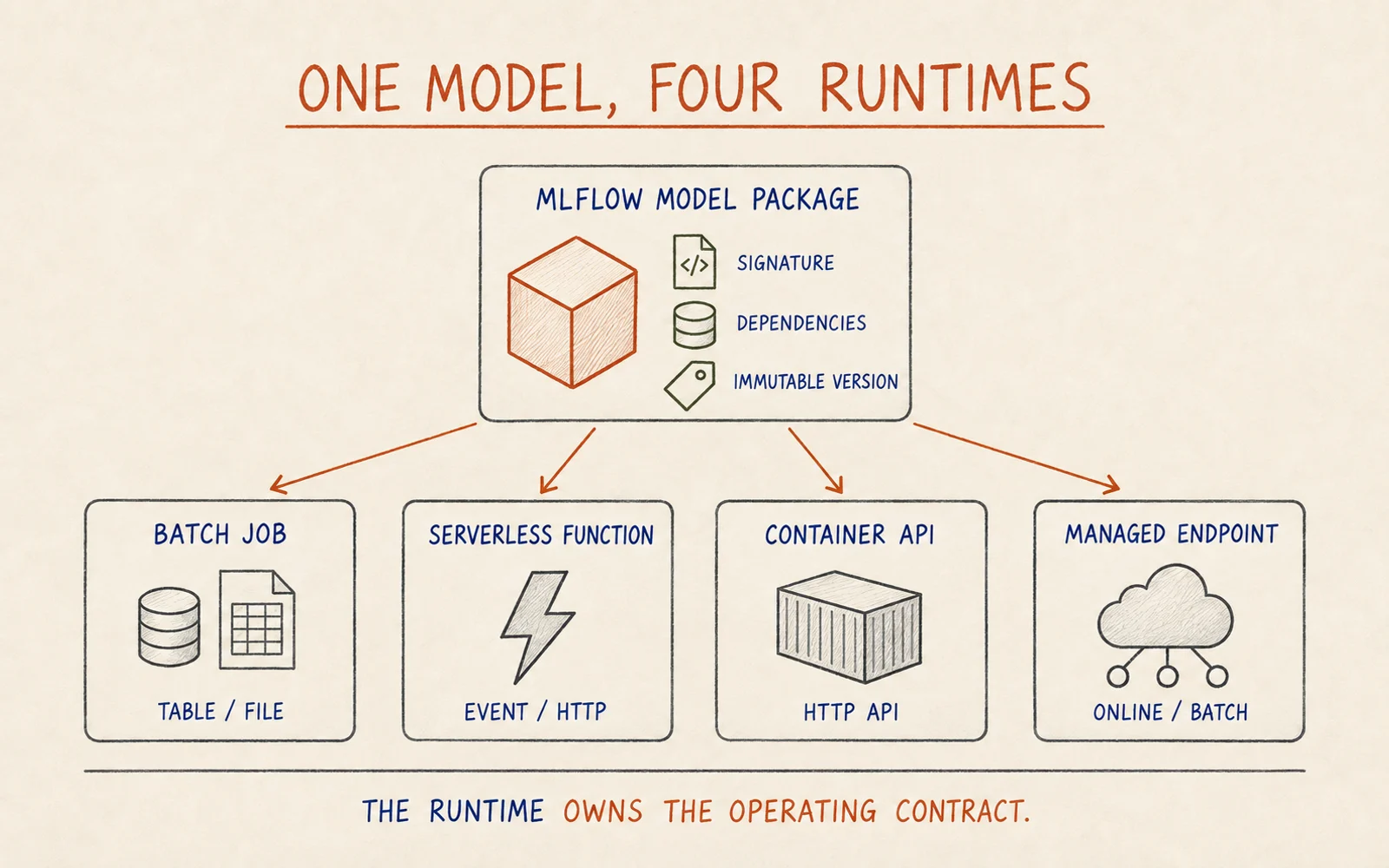
Compare ML model deployment patterns with MLflow: batch jobs, serverless functions, container APIs and managed endpoints for production inference.
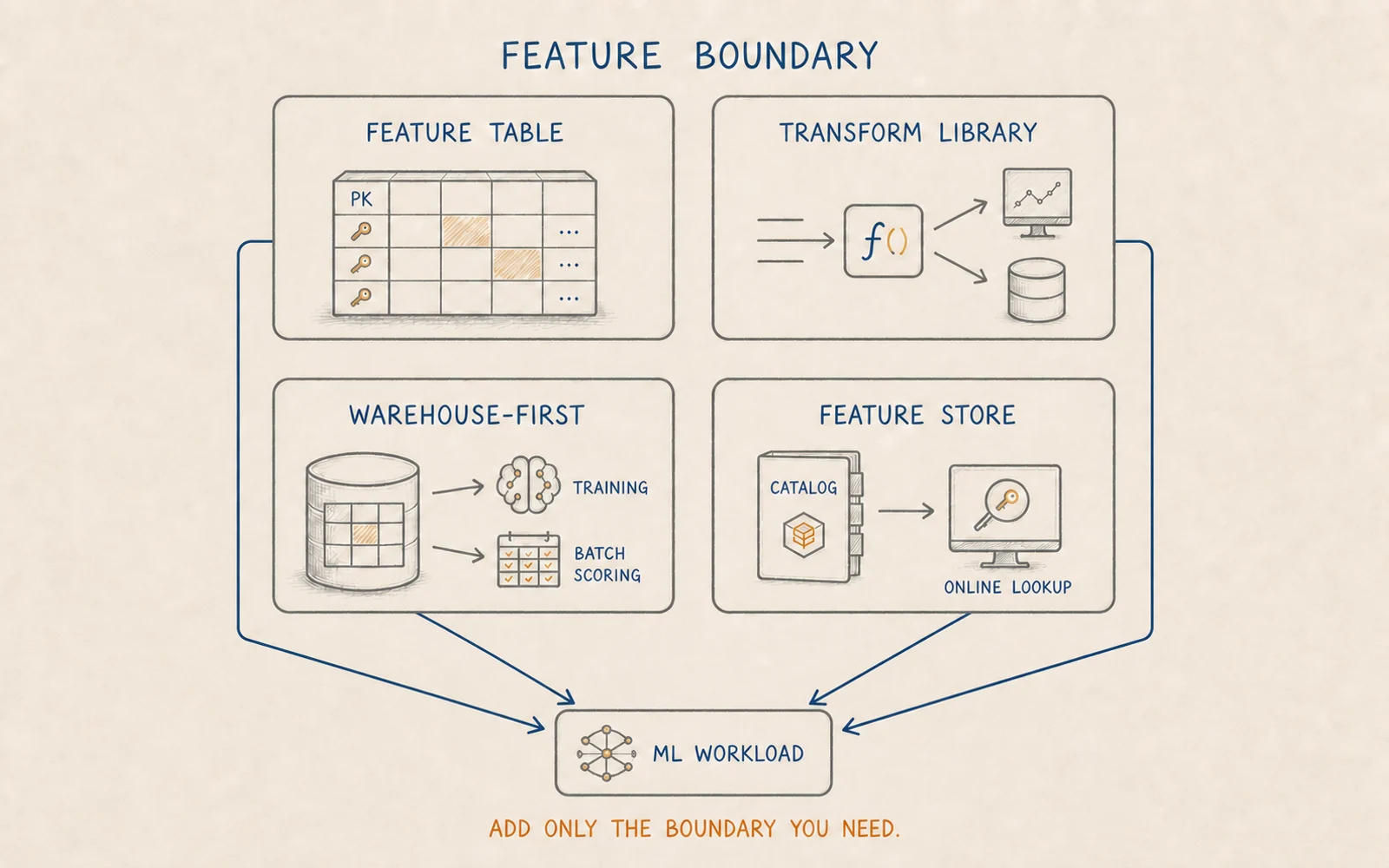
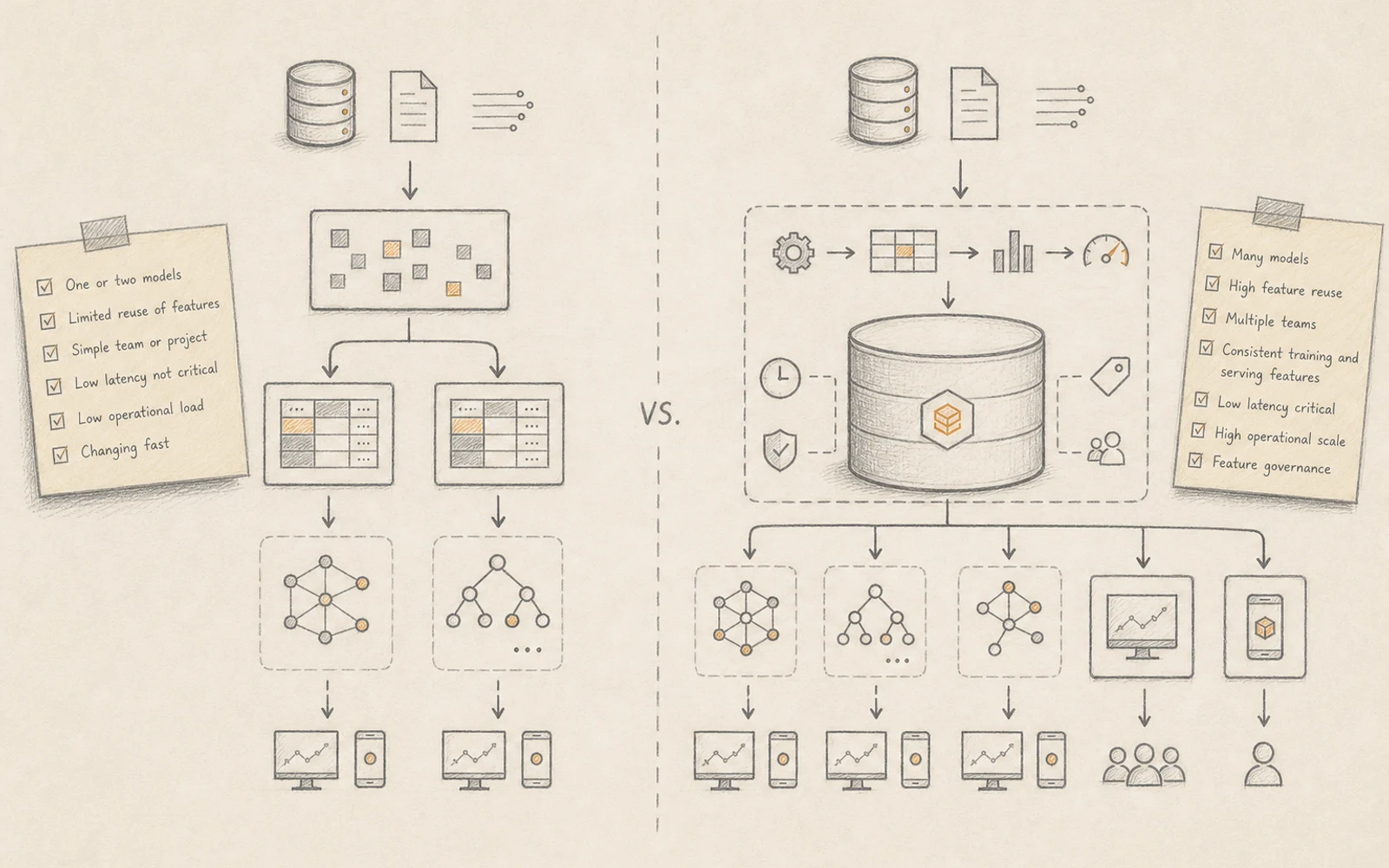
Feature store alternatives for production ML: when feature tables, shared transformation libraries or warehouse-first patterns are enough, and when a feature store earns its cost.
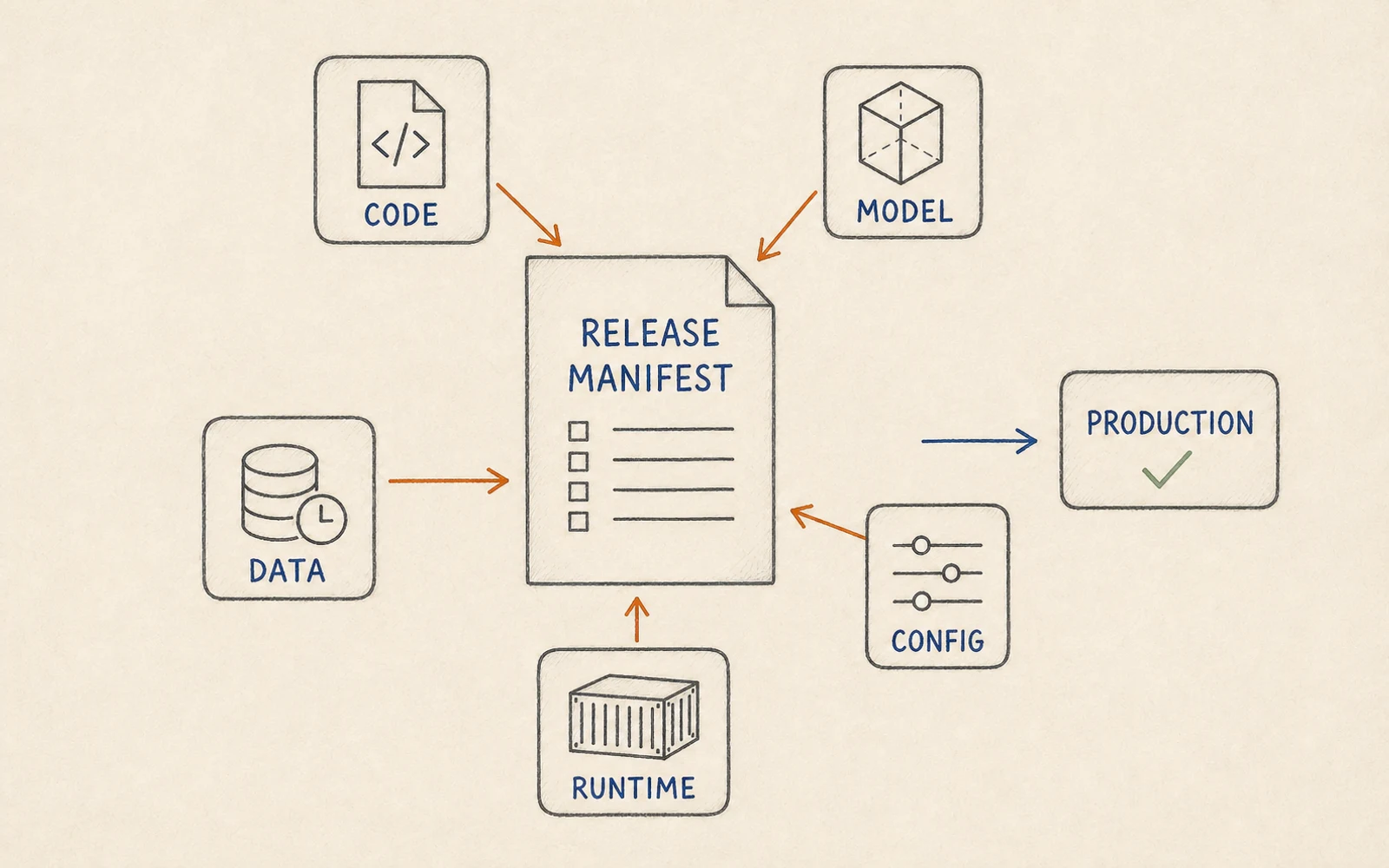
ML release management needs more than a registered model. Learn how MLflow supports versioning, validation and rollback on Azure Databricks.
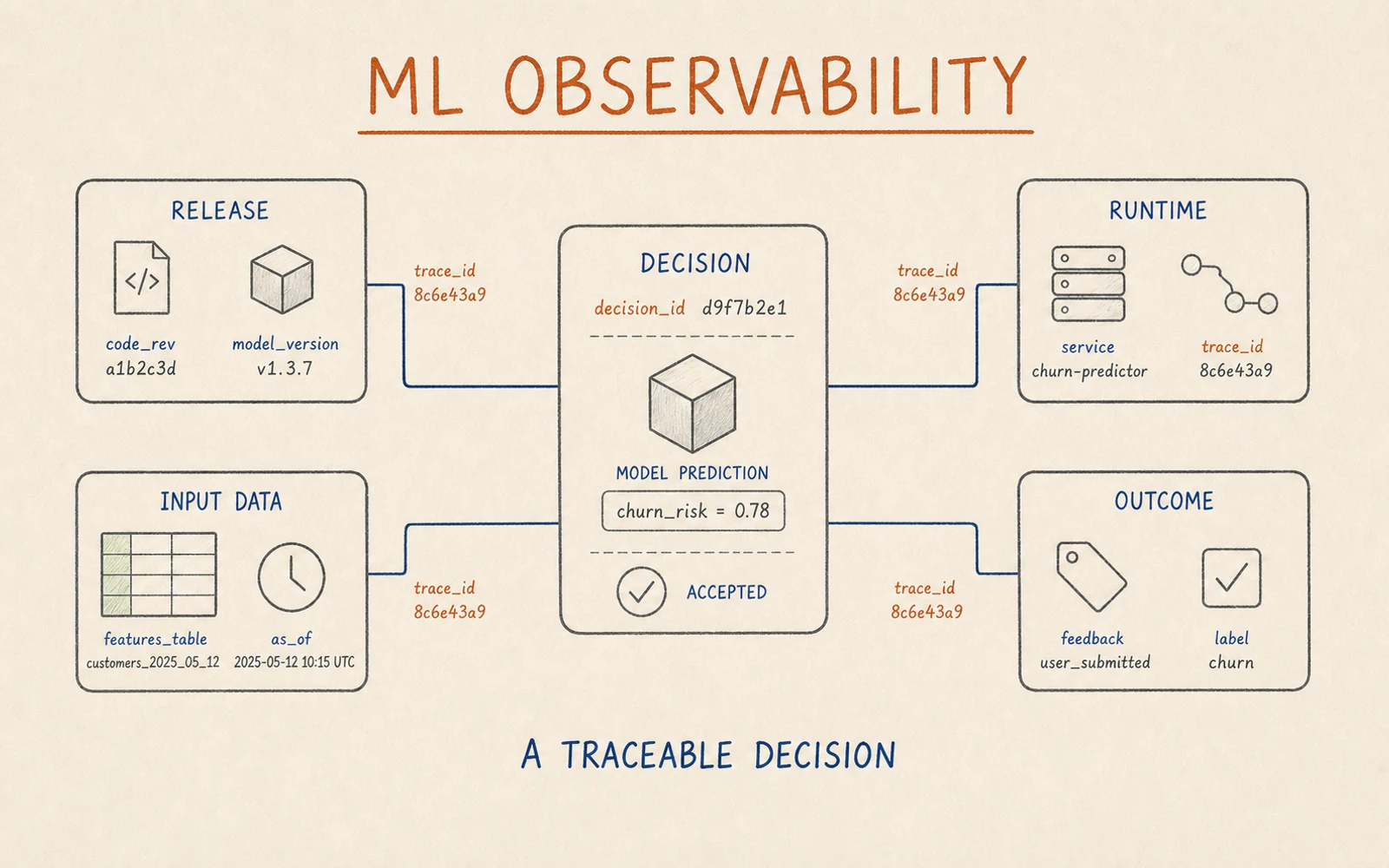
ML observability connects releases, data, runtime behavior and outcomes so teams can explain and operate production machine learning decisions.
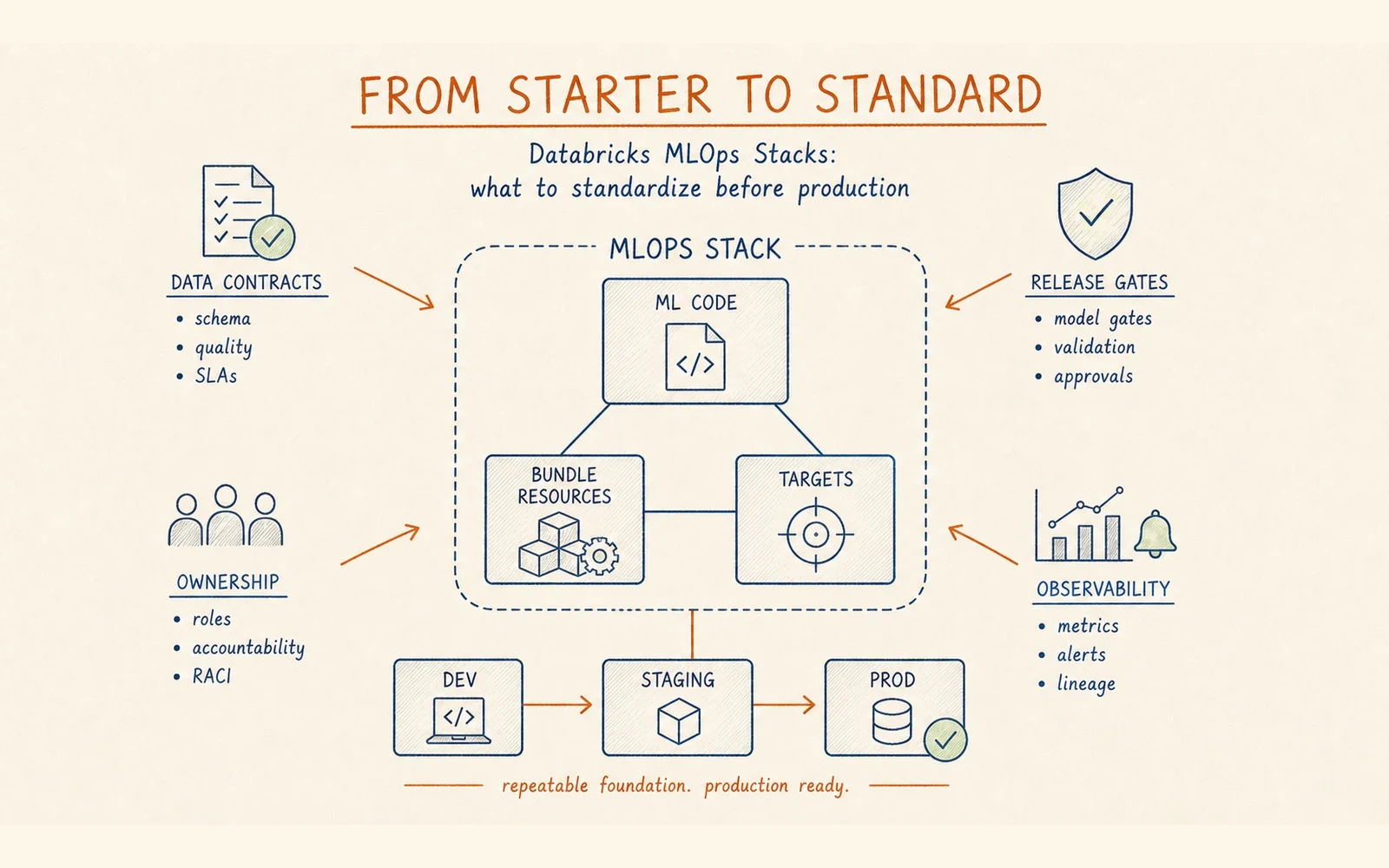
Databricks MLOps Stacks are a practical starting point for production ML. Learn how to grow the template into a team standard for delivery, release and operations.
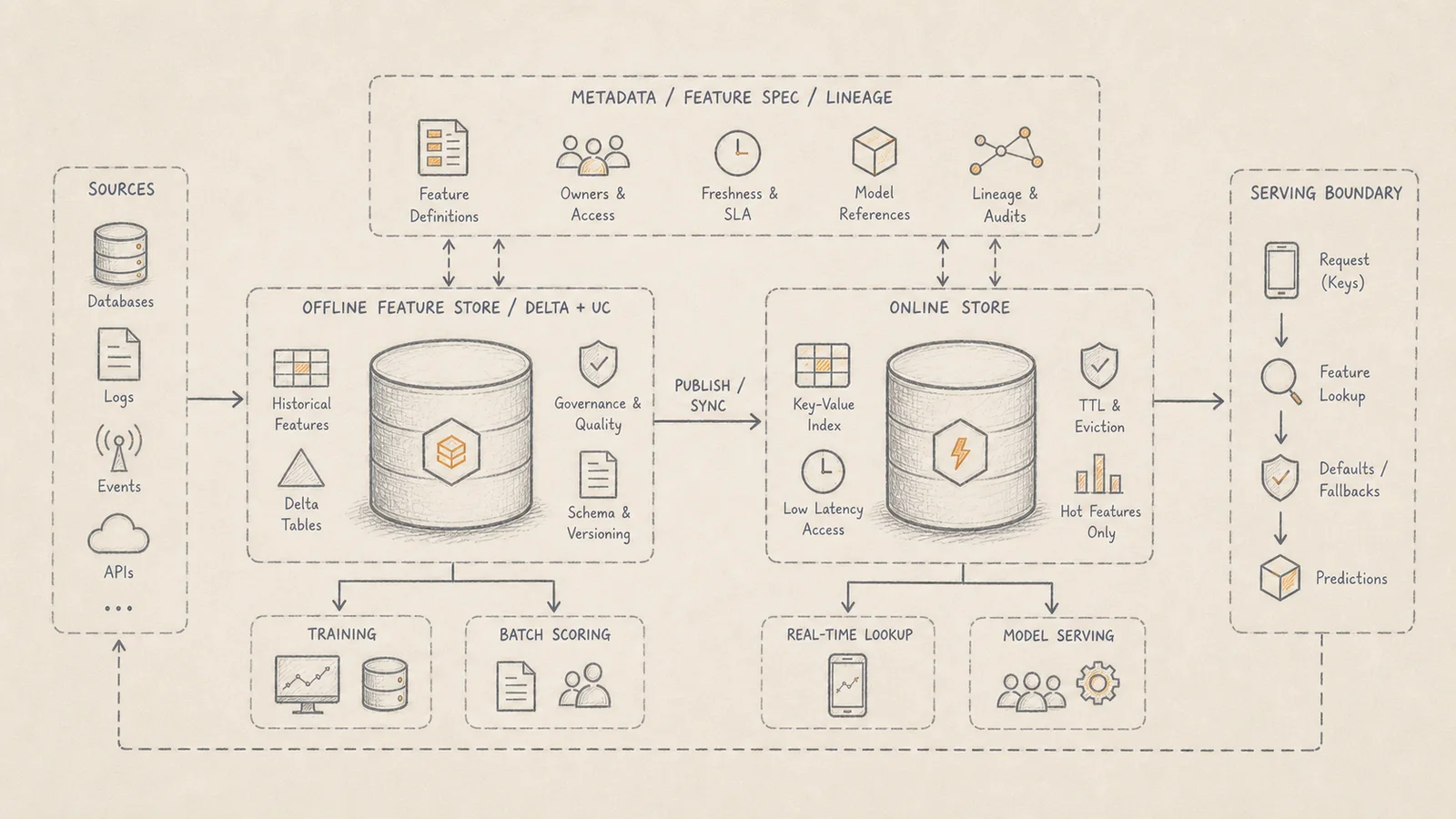
Design feature store architecture across offline feature stores, online lookup, metadata contracts and feature serving for production ML.
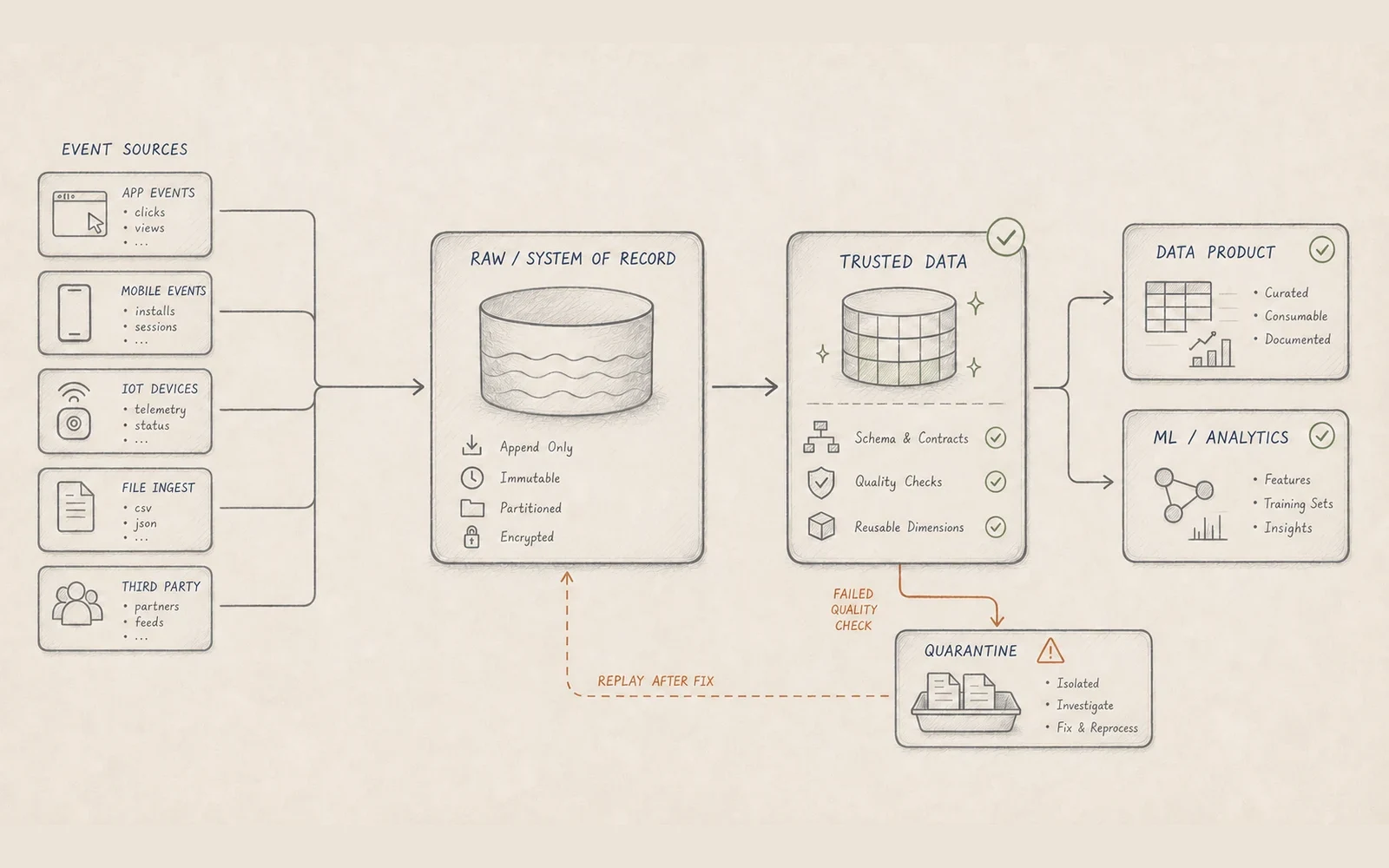
Medallion architecture for engineers: design raw data, trusted views and published data products with clear contracts, replay paths and ownership.
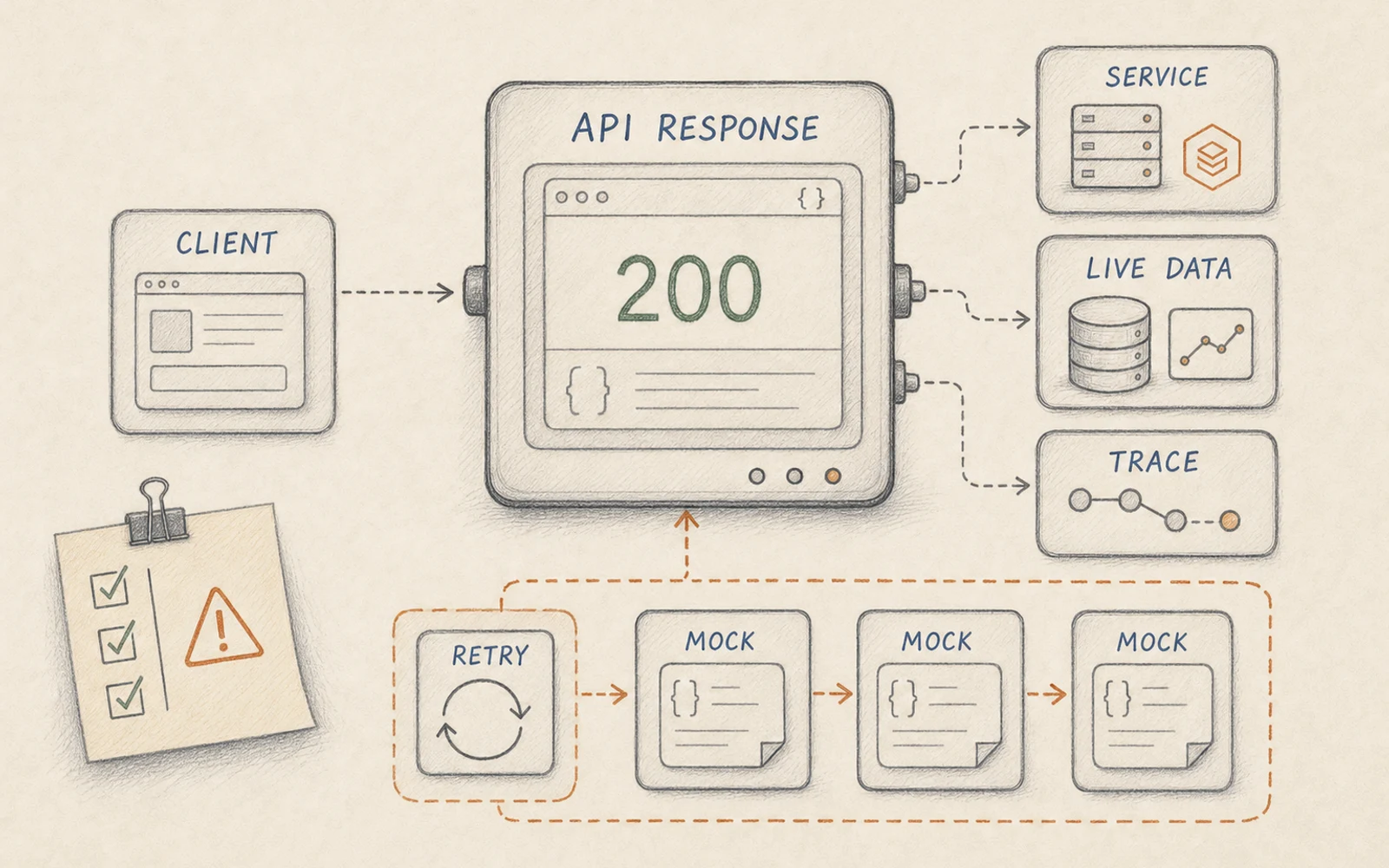
AI-generated code risks are often not obvious syntax errors. The harder problem is code that catches real failures, retries them badly, returns mock data and still reports success.
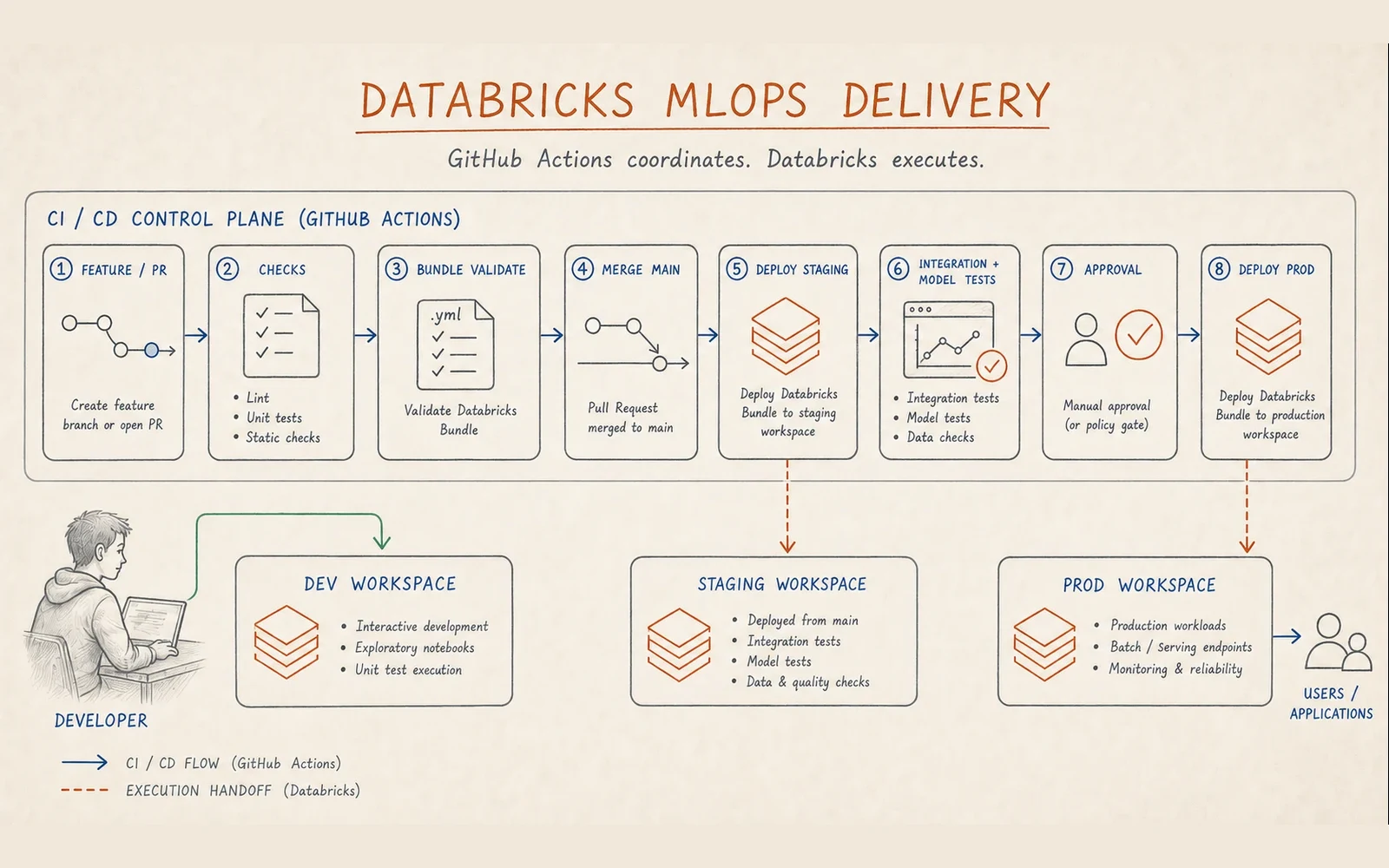
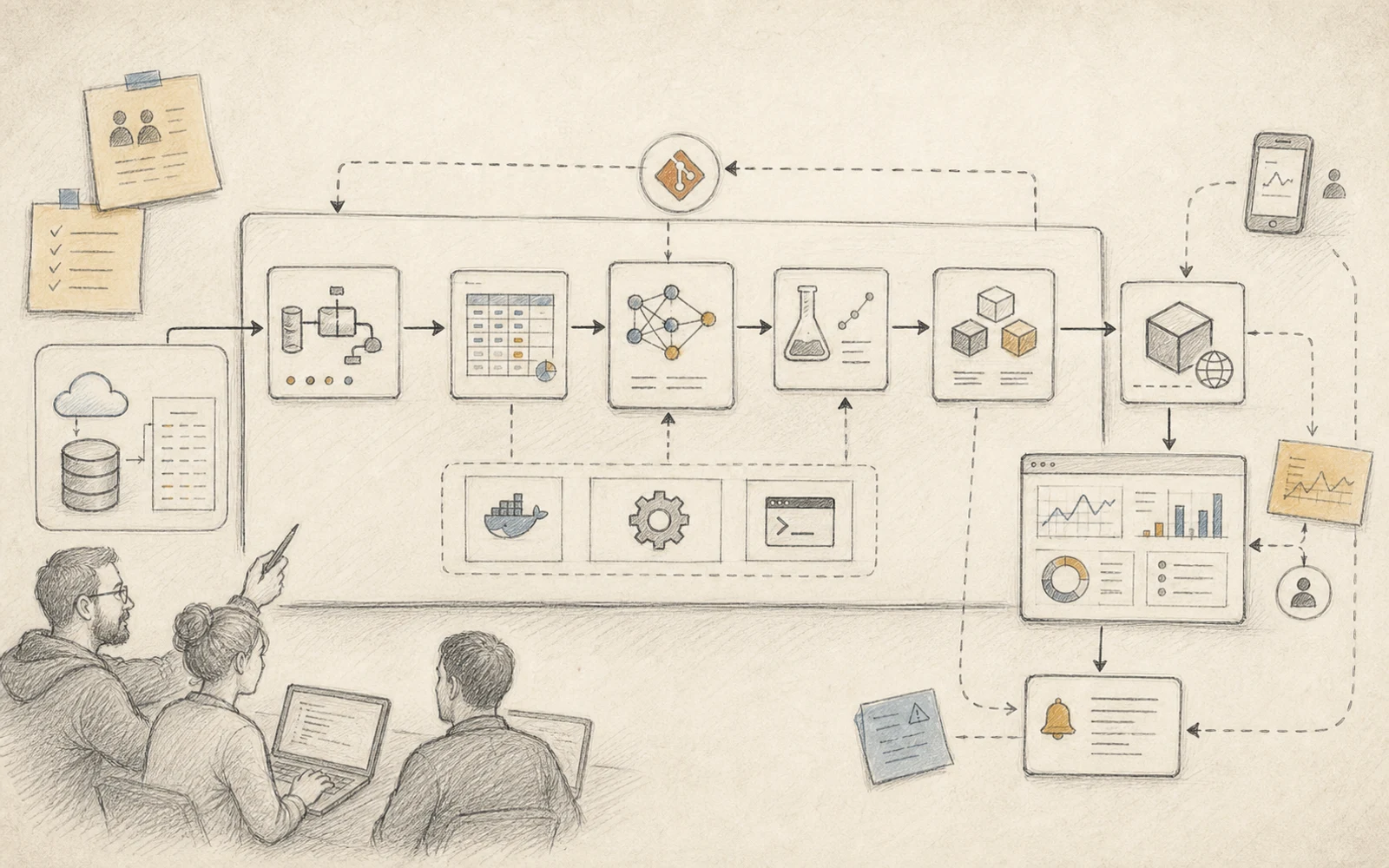
A production CI/CD pattern for Databricks MLOps using GitHub Actions, Declarative Automation Bundles, validation gates and environment promotion.
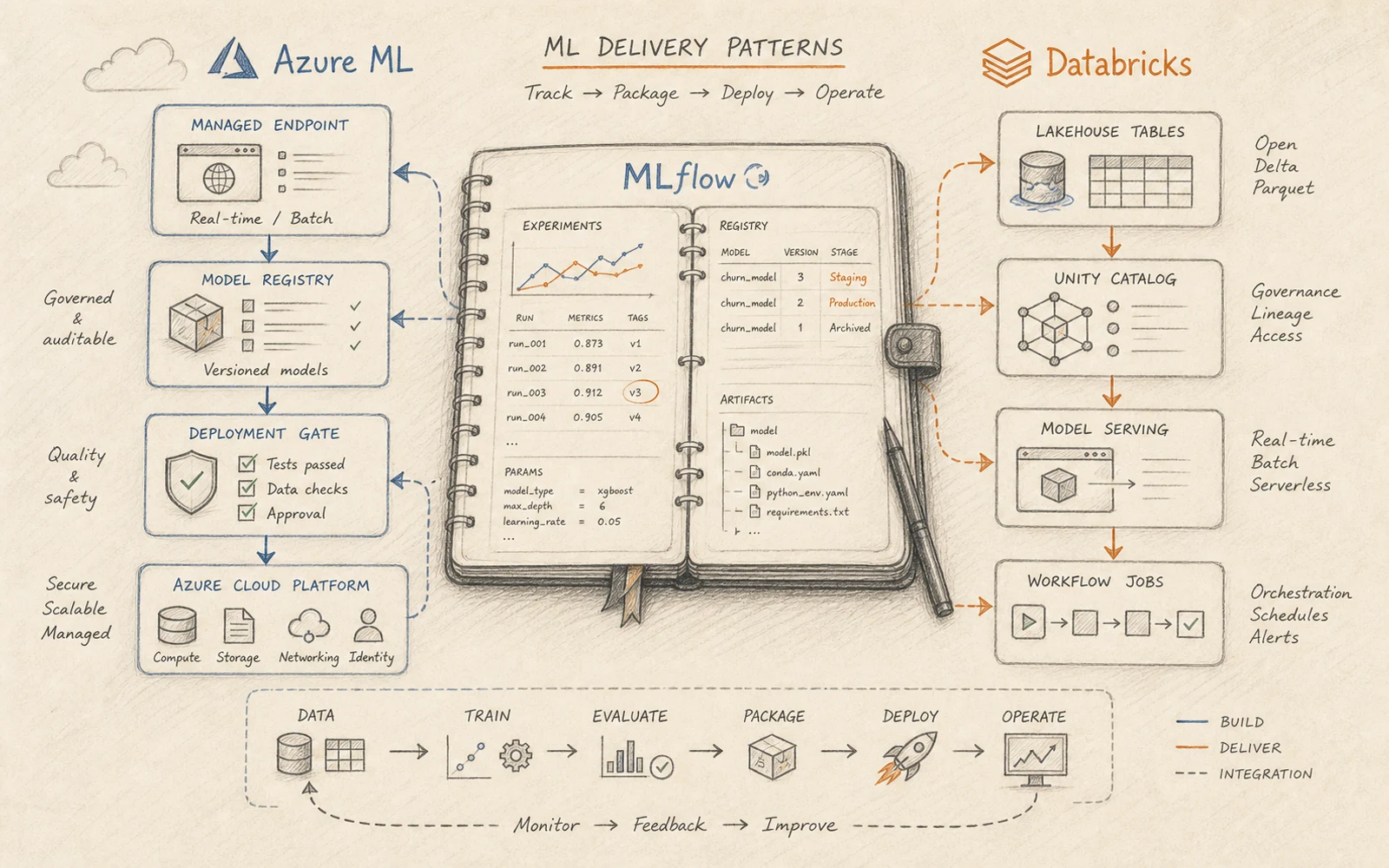
Compare MLflow delivery patterns for Azure ML and Databricks: model lifecycle, serving, validation, environment promotion and production operations.
Learn what a feature store does, when ML teams need one, and when versioned feature tables or warehouse-first pipelines are enough.
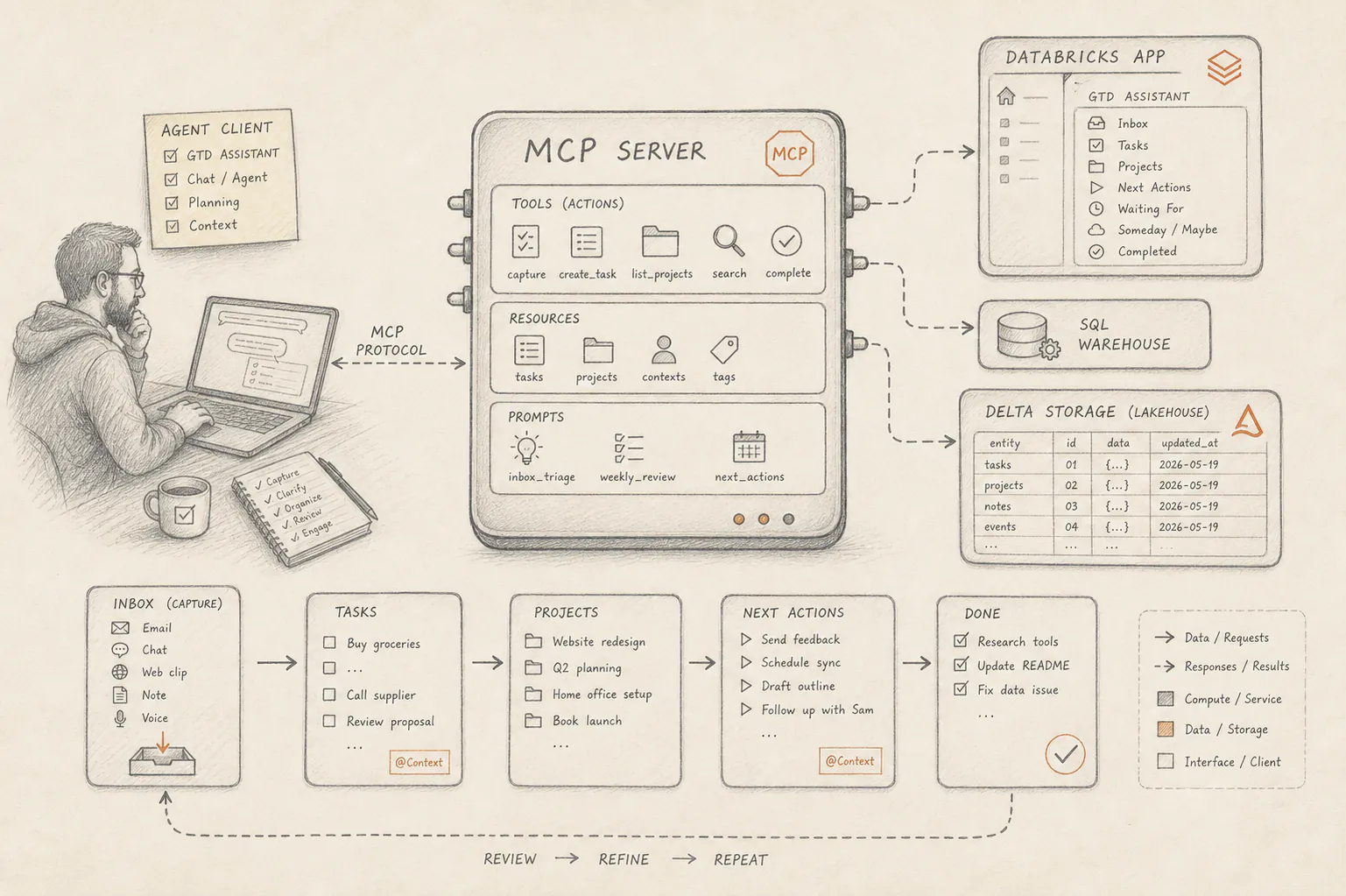
A practical Databricks MCP server tutorial: build a custom MCP server in Python, keep the tool layer small, and deploy it on Databricks Apps with a Delta-backed GTD assistant.
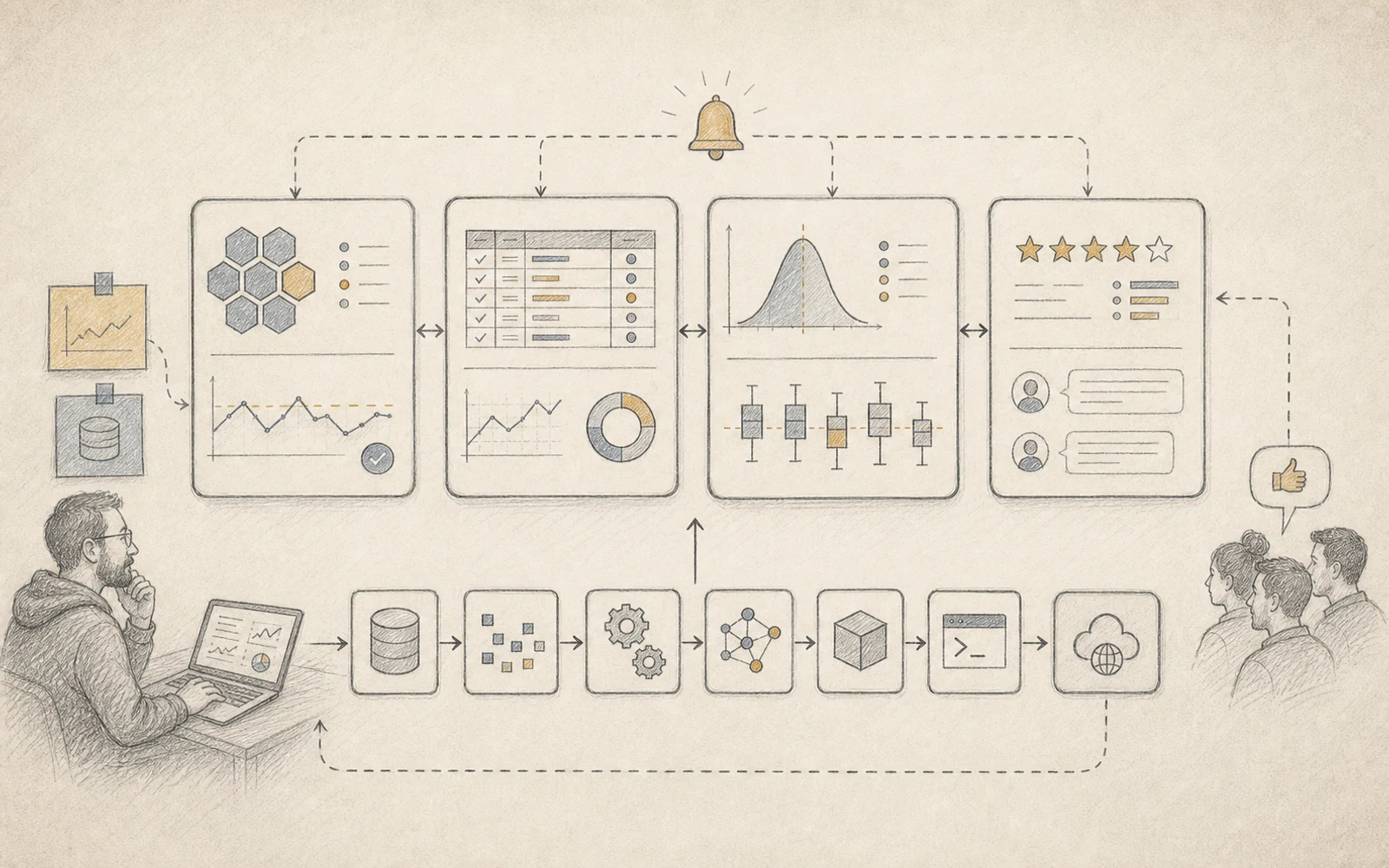
A practical checklist for monitoring ML systems: service health, data quality, prediction behavior, drift and business feedback.
If you ask whether MLOps is mostly software engineering, the practical answer is broader: delivery, data reliability, architecture and operational ownership usually matter more than the model code itself.
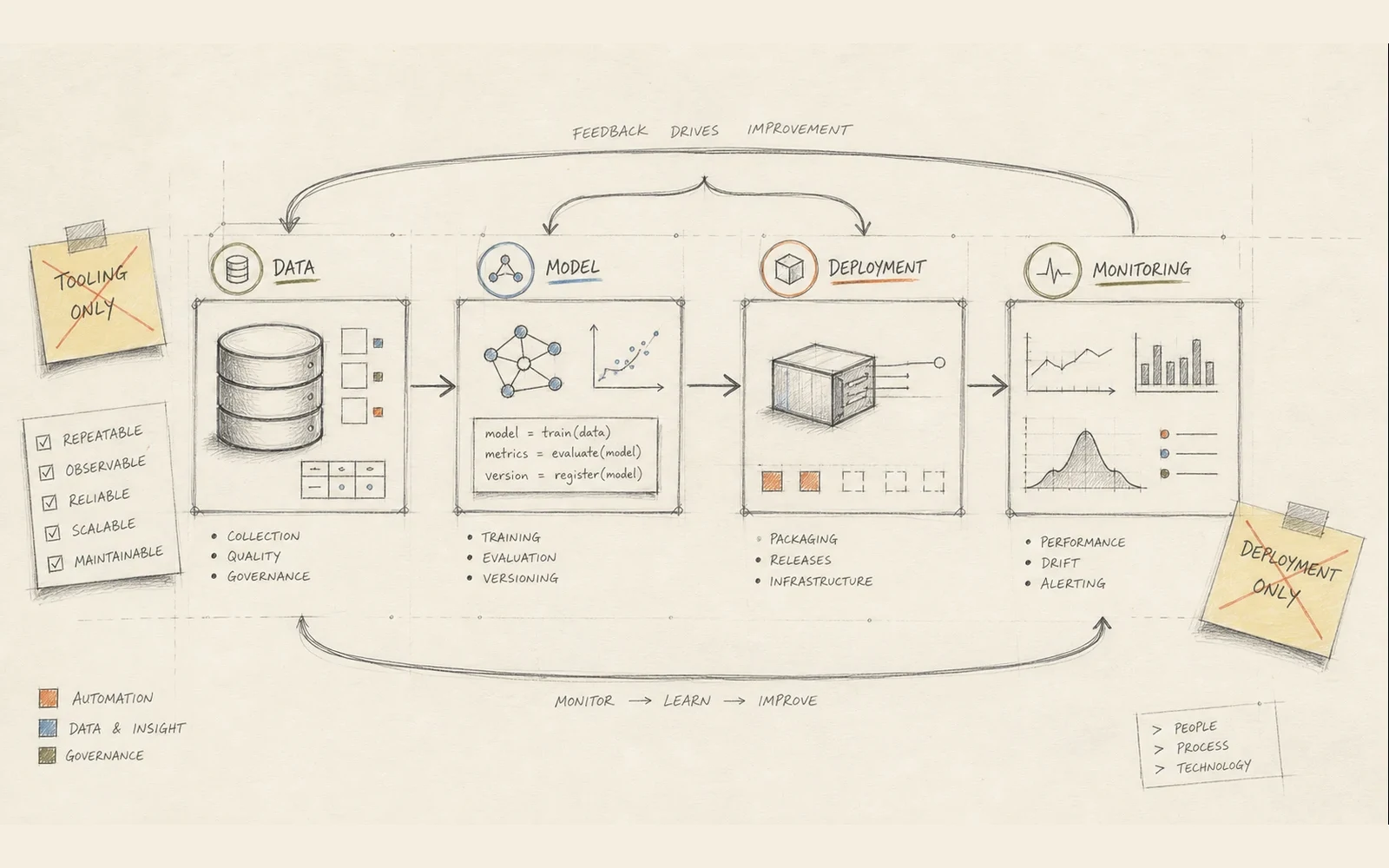
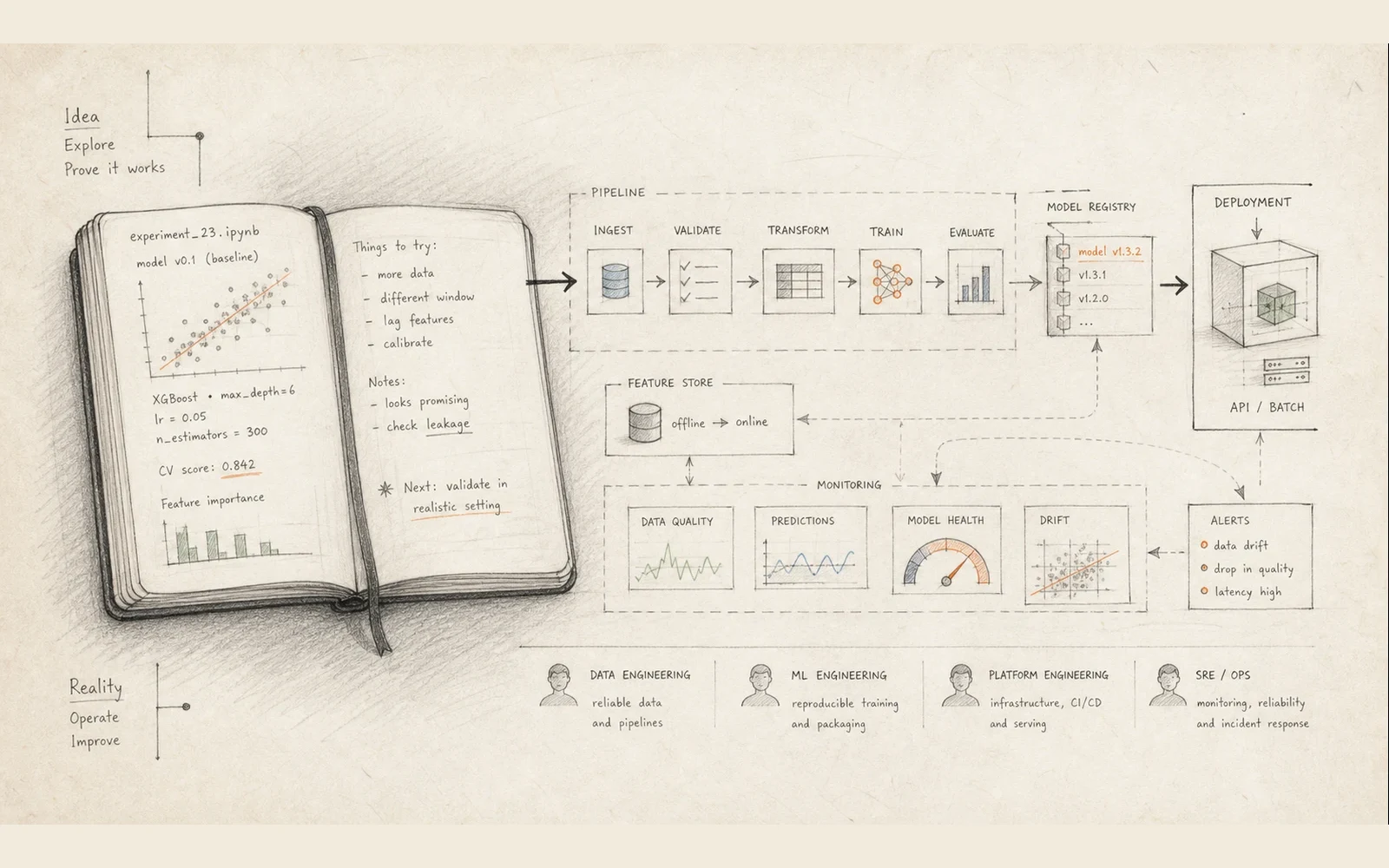
A practical definition of MLOps and a clearer view of where it starts, what it covers and why teams keep reducing it to tooling or deployment.
A practical guide to the systems, delivery and MLOps concerns that start after a model works in a notebook.
No posts match the selected topic.