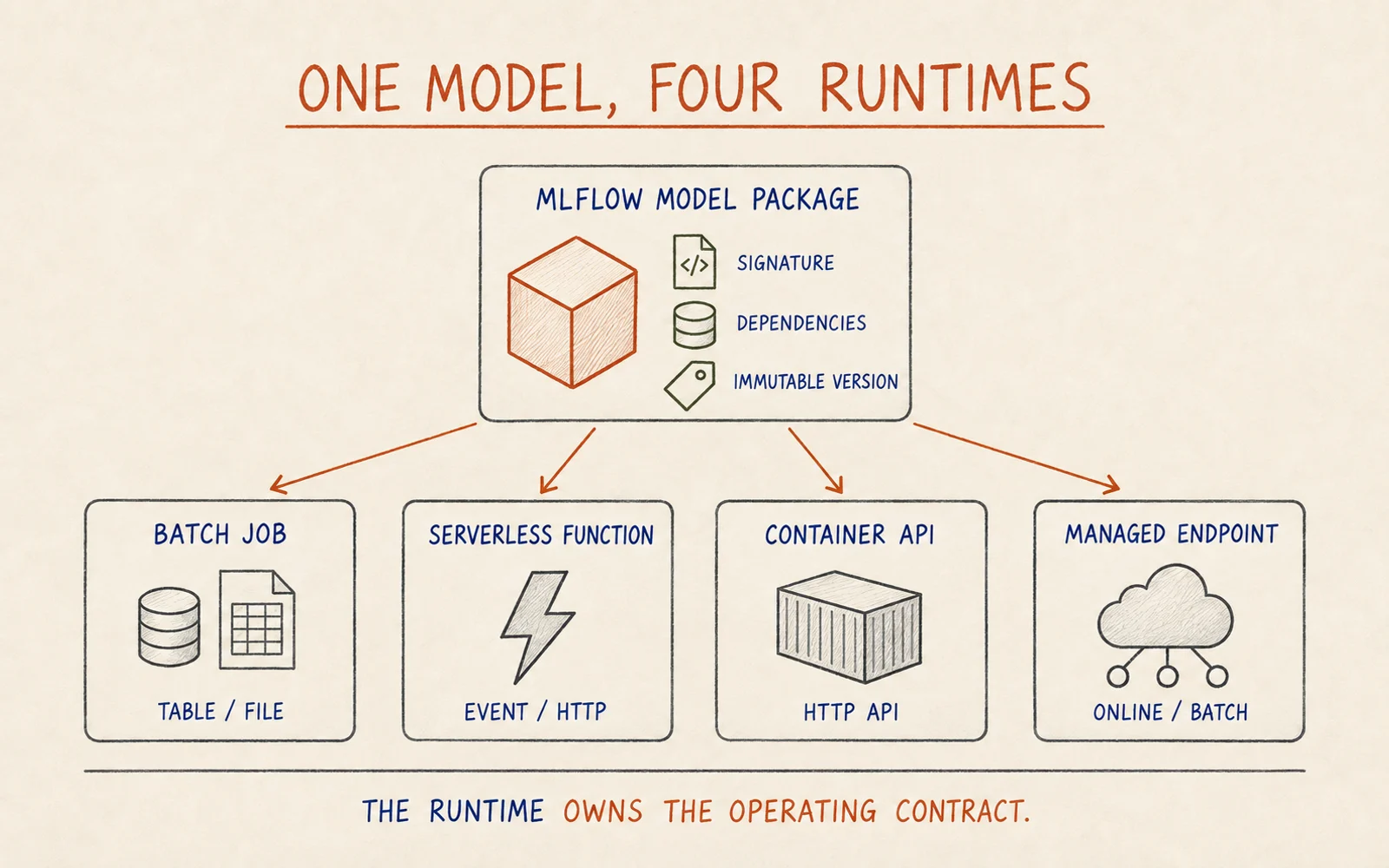
ML model deployment patterns: batch jobs, functions and managed endpoints
Compare ML model deployment patterns with MLflow: batch jobs, serverless functions, container APIs and managed endpoints for production inference.
This topic collects production-first MLOps writing: delivery patterns, model release decisions, observability evidence, ownership boundaries and the operating practices that make ML systems maintainable.
The focus is practical rather than tool-first. Start here when the question is how to move from experiments to repeatable, observable and governed production workflows, with enough context to explain what happened after a release.
Compare ML model deployment patterns with MLflow: batch jobs, serverless functions, container APIs and managed endpoints for production inference.
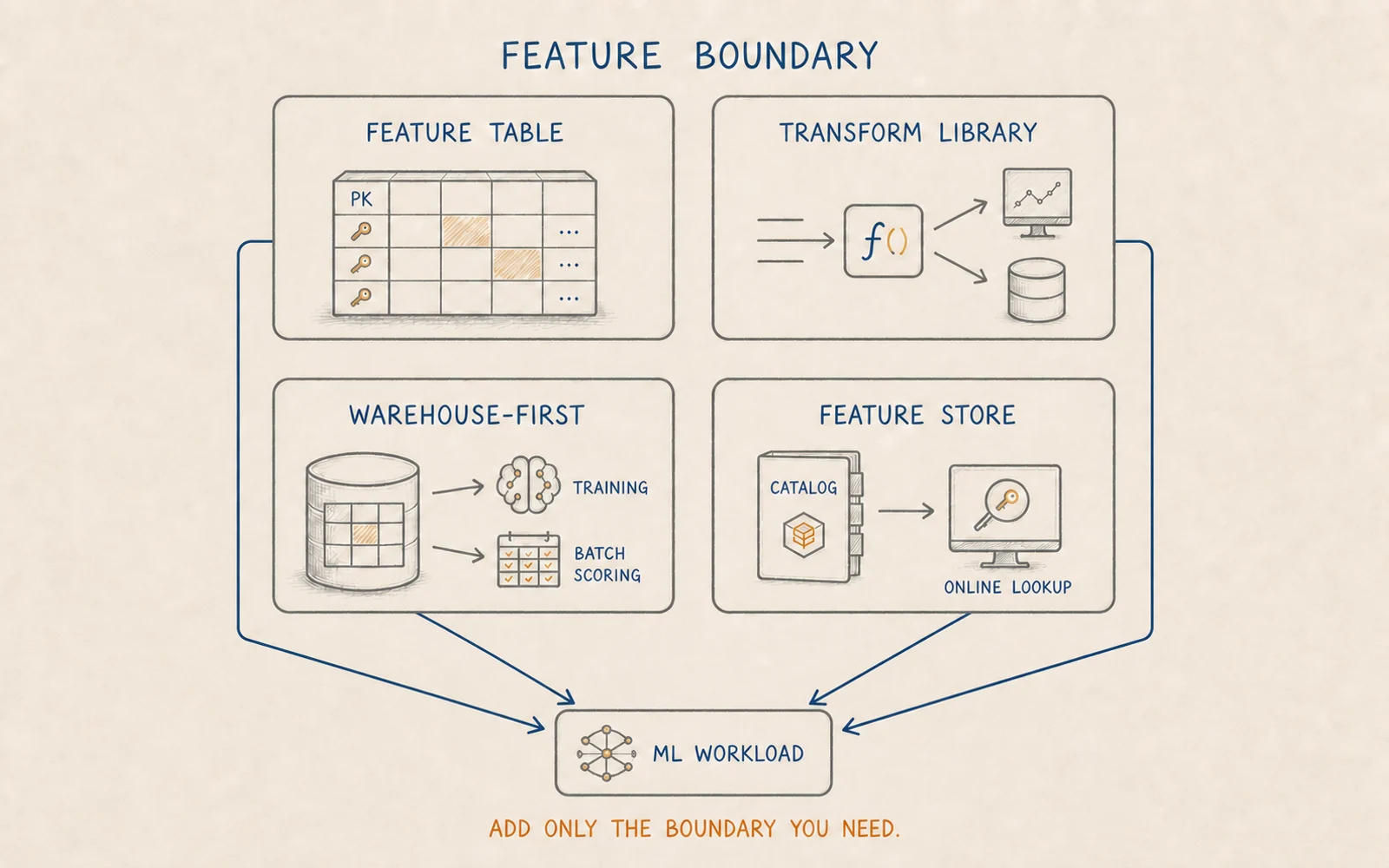
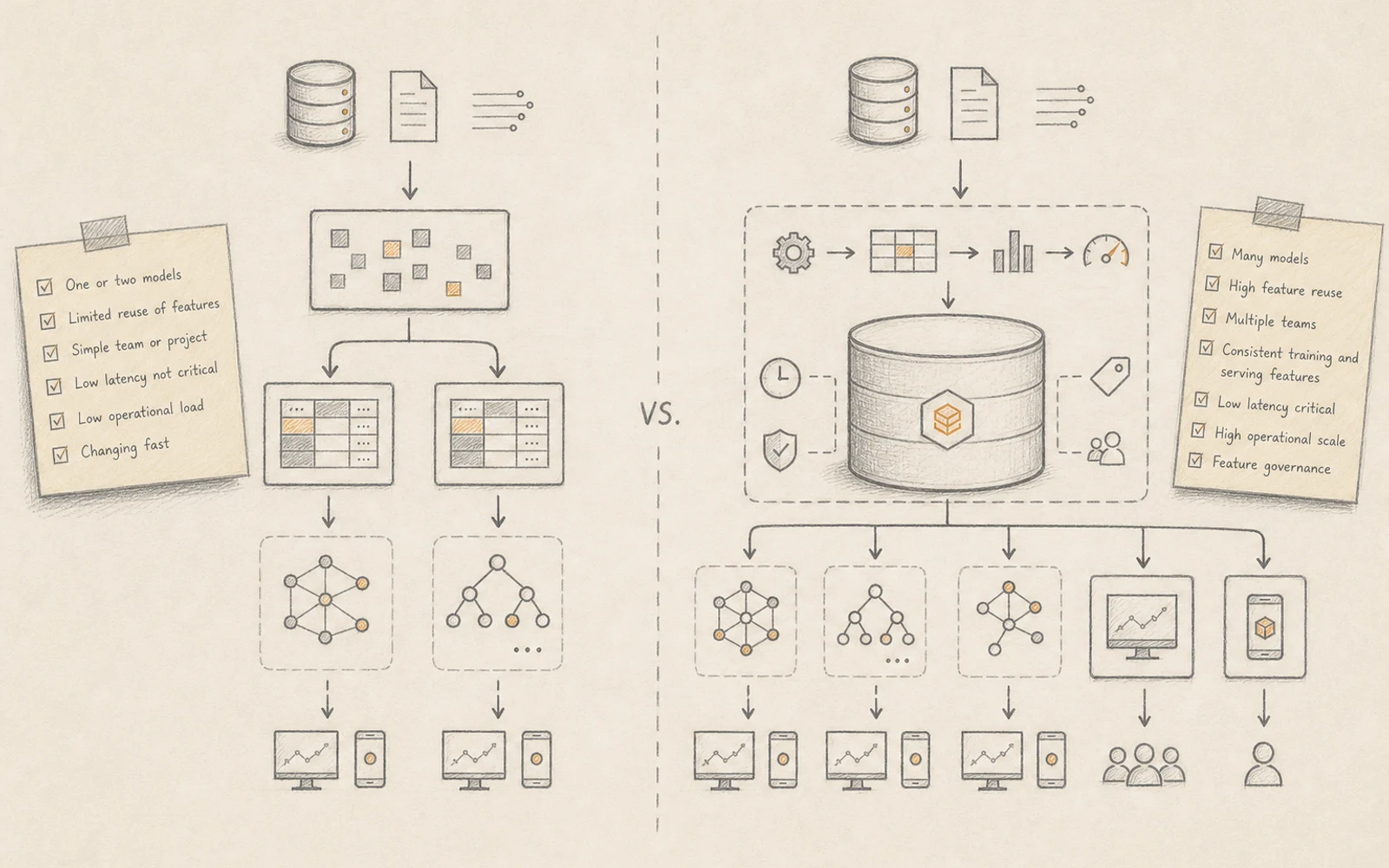
Feature store alternatives for production ML: when feature tables, shared transformation libraries or warehouse-first patterns are enough, and when a feature store earns its cost.
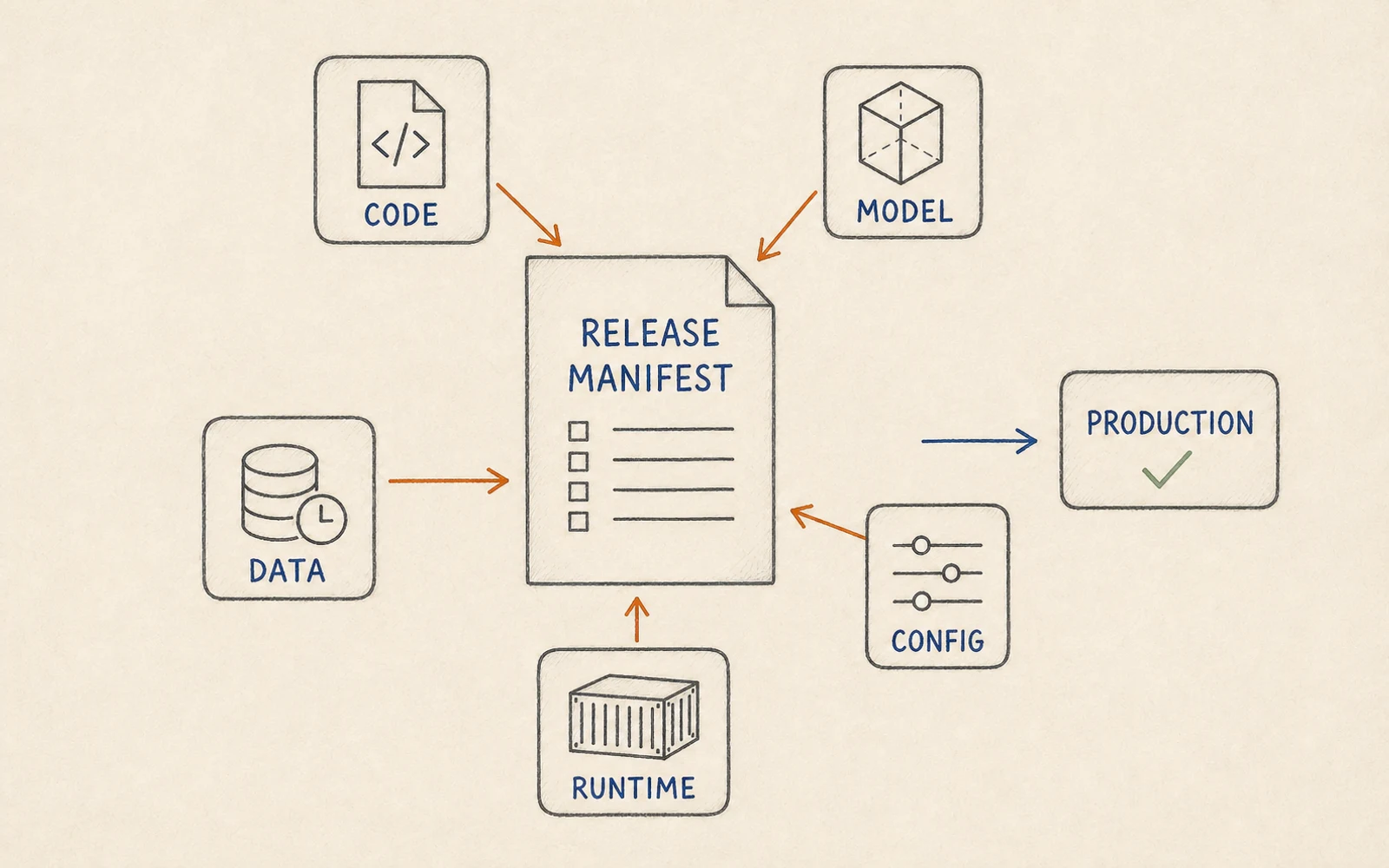
ML release management needs more than a registered model. Learn how MLflow supports versioning, validation and rollback on Azure Databricks.
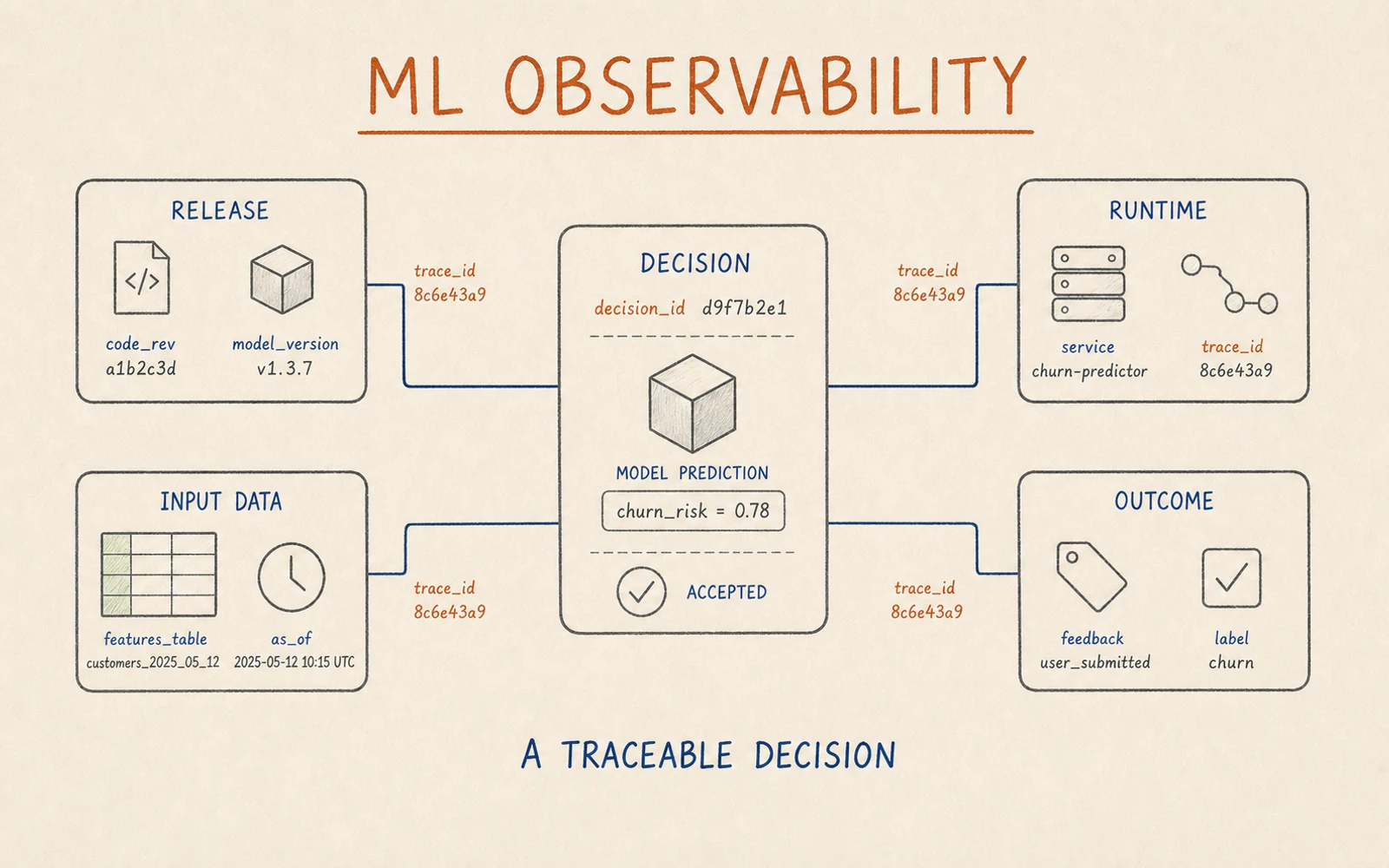
ML observability connects releases, data, runtime behavior and outcomes so teams can explain and operate production machine learning decisions.
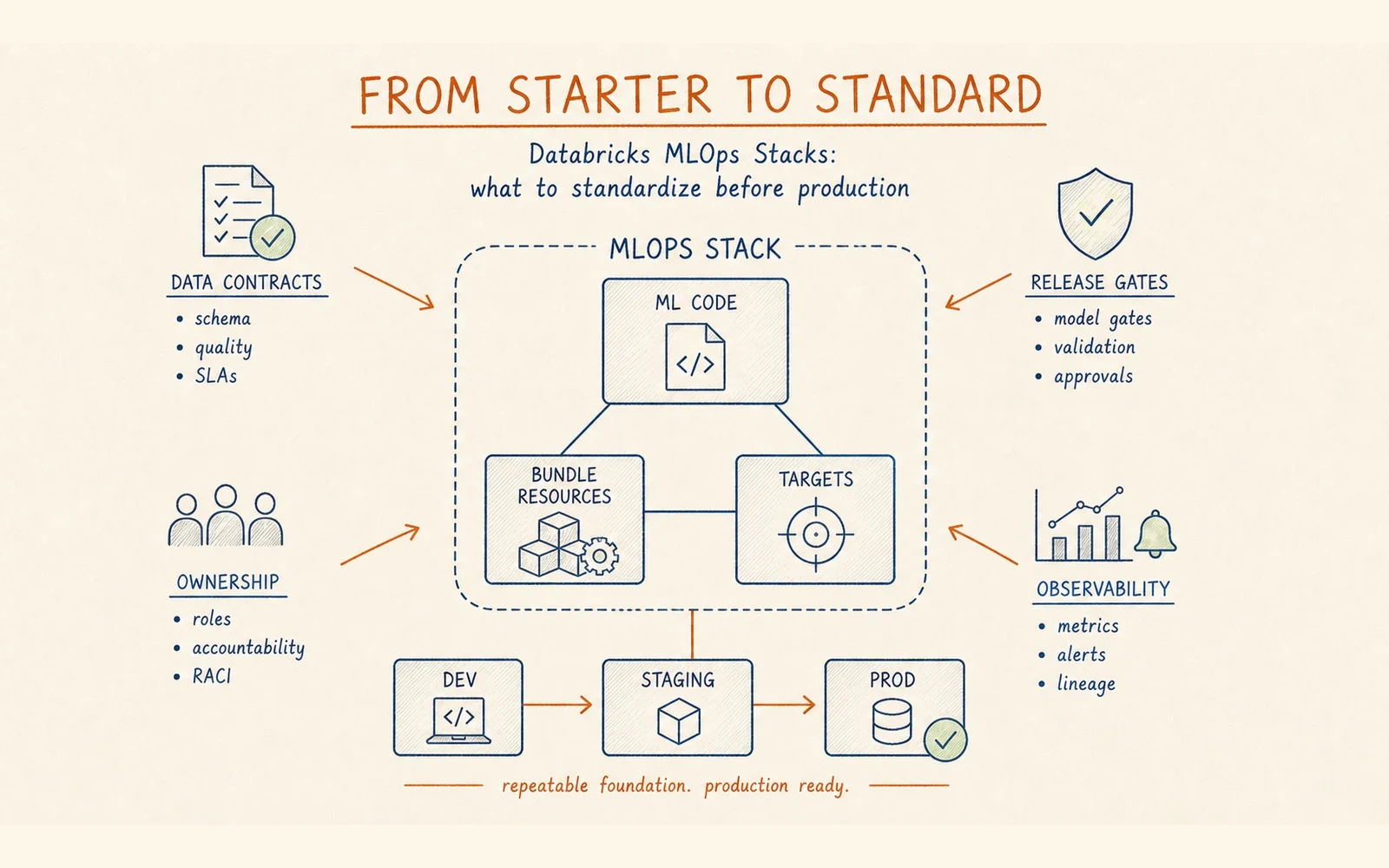
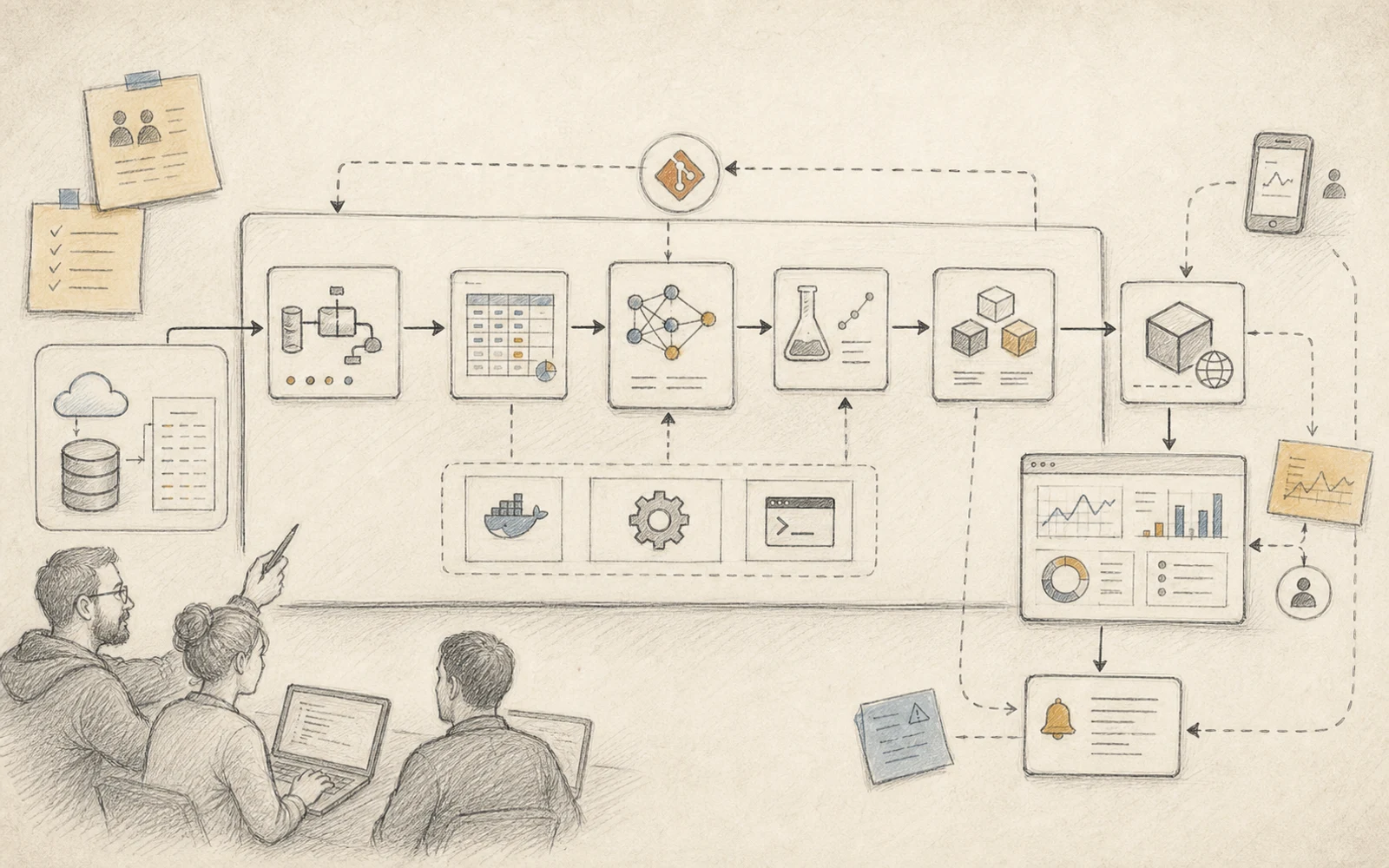
Databricks MLOps Stacks are a practical starting point for production ML. Learn how to grow the template into a team standard for delivery, release and operations.
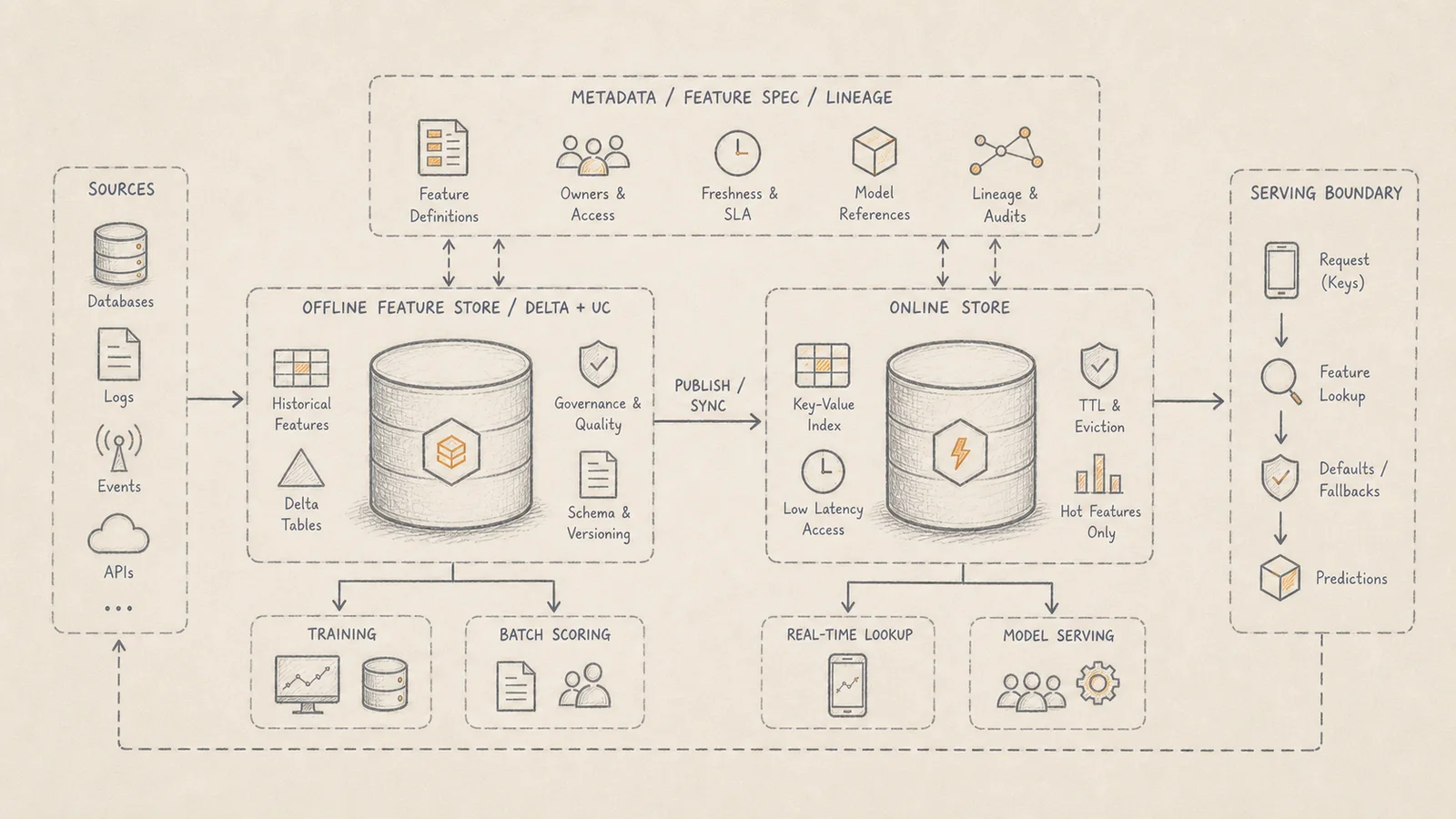
Design feature store architecture across offline feature stores, online lookup, metadata contracts and feature serving for production ML.
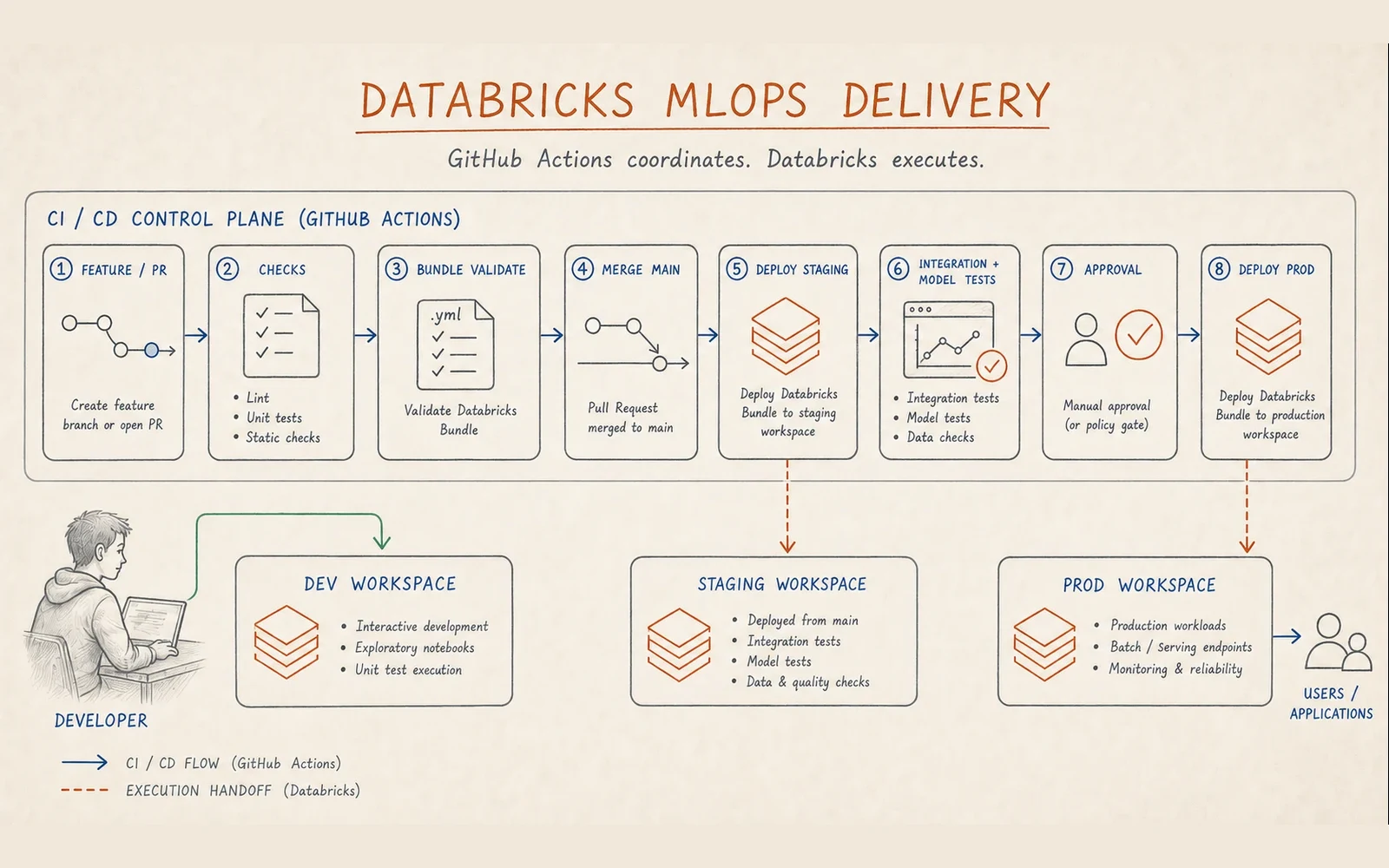
A production CI/CD pattern for Databricks MLOps using GitHub Actions, Declarative Automation Bundles, validation gates and environment promotion.
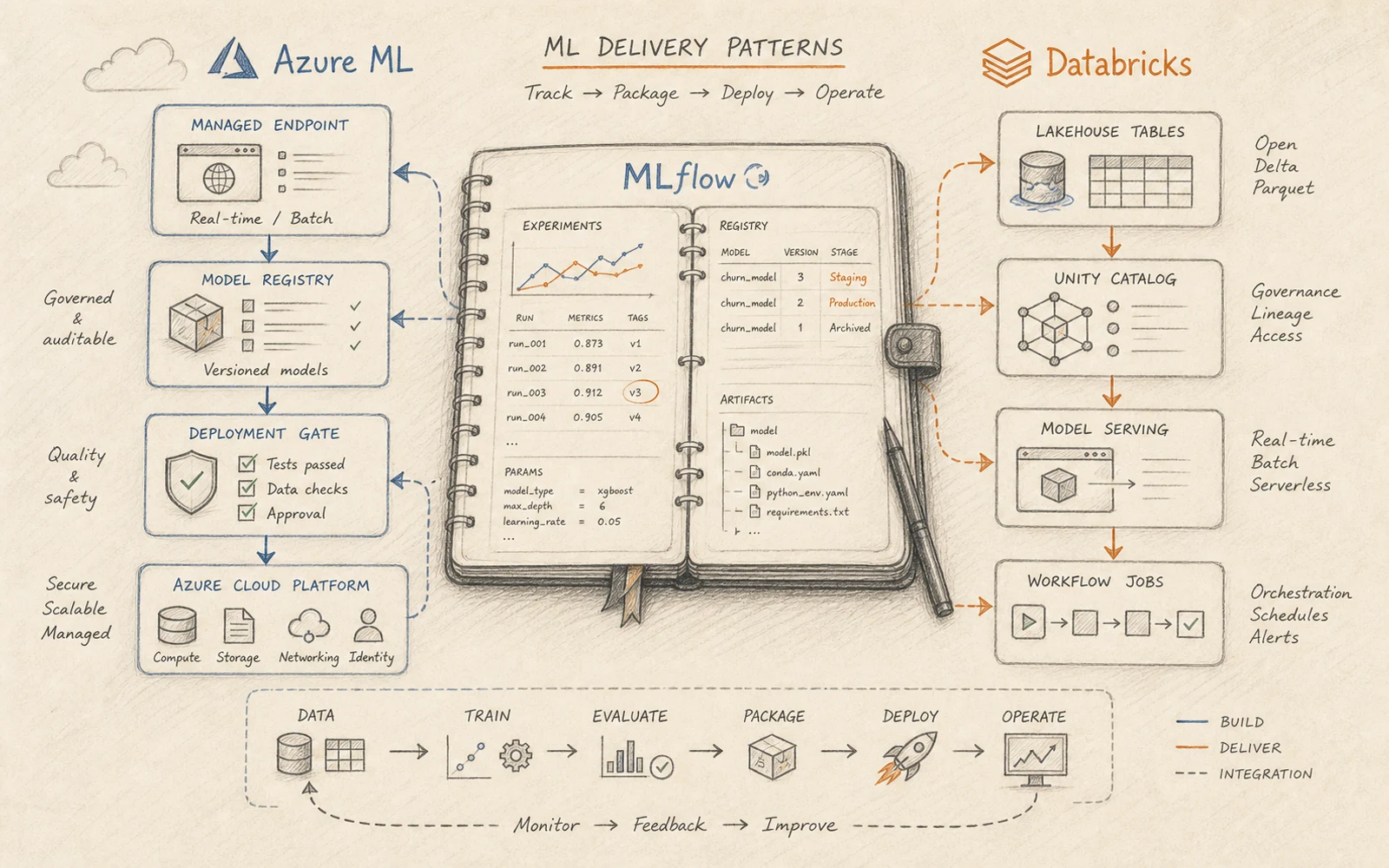
Compare MLflow delivery patterns for Azure ML and Databricks: model lifecycle, serving, validation, environment promotion and production operations.
Learn what a feature store does, when ML teams need one, and when versioned feature tables or warehouse-first pipelines are enough.
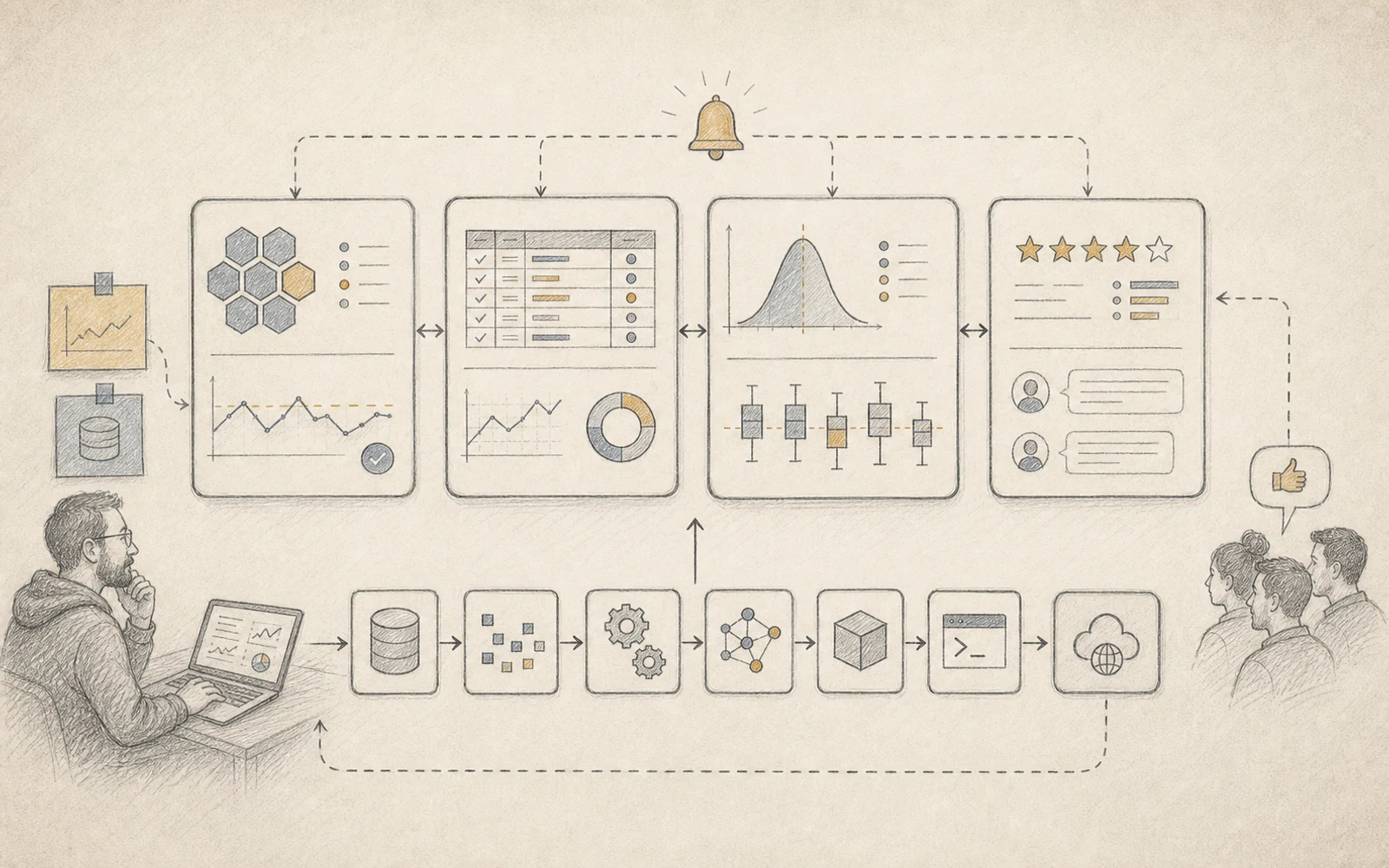
A practical checklist for monitoring ML systems: service health, data quality, prediction behavior, drift and business feedback.
If you ask whether MLOps is mostly software engineering, the practical answer is broader: delivery, data reliability, architecture and operational ownership usually matter more than the model code itself.
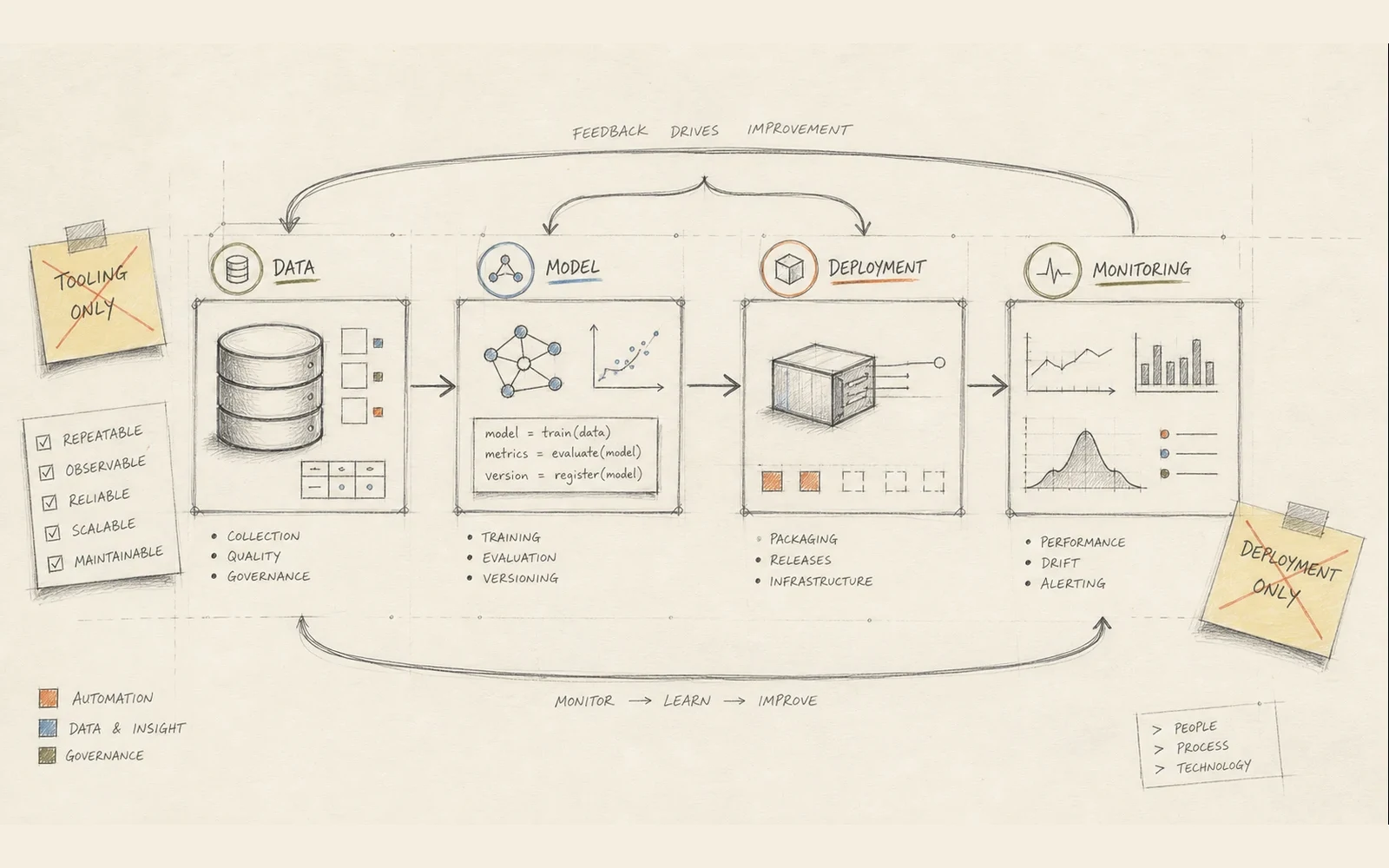
A practical definition of MLOps and a clearer view of where it starts, what it covers and why teams keep reducing it to tooling or deployment.
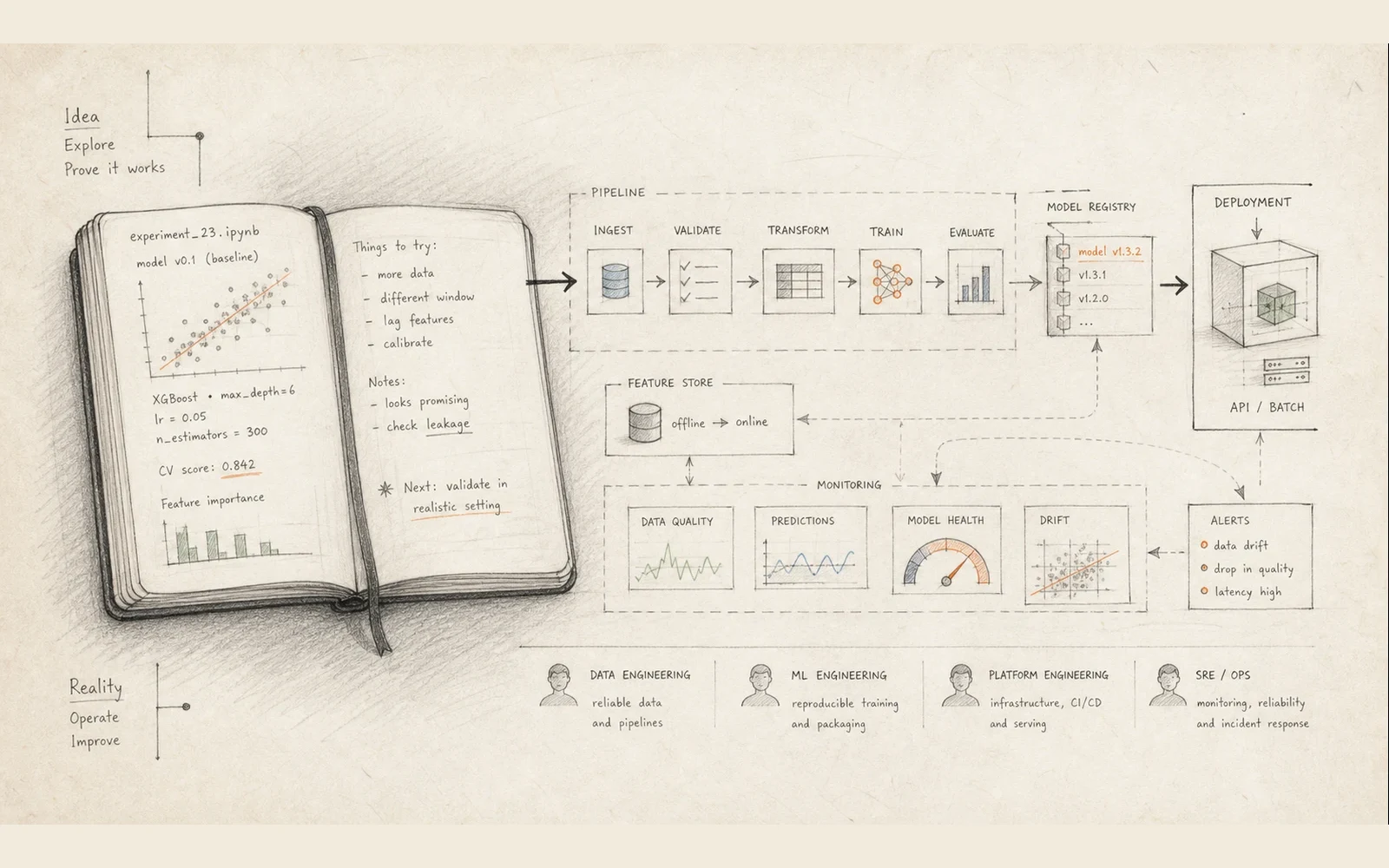
A practical guide to the systems, delivery and MLOps concerns that start after a model works in a notebook.