This topic collects articles and guides about Data Engineering, with a practical focus on production data, AI and ML engineering systems.
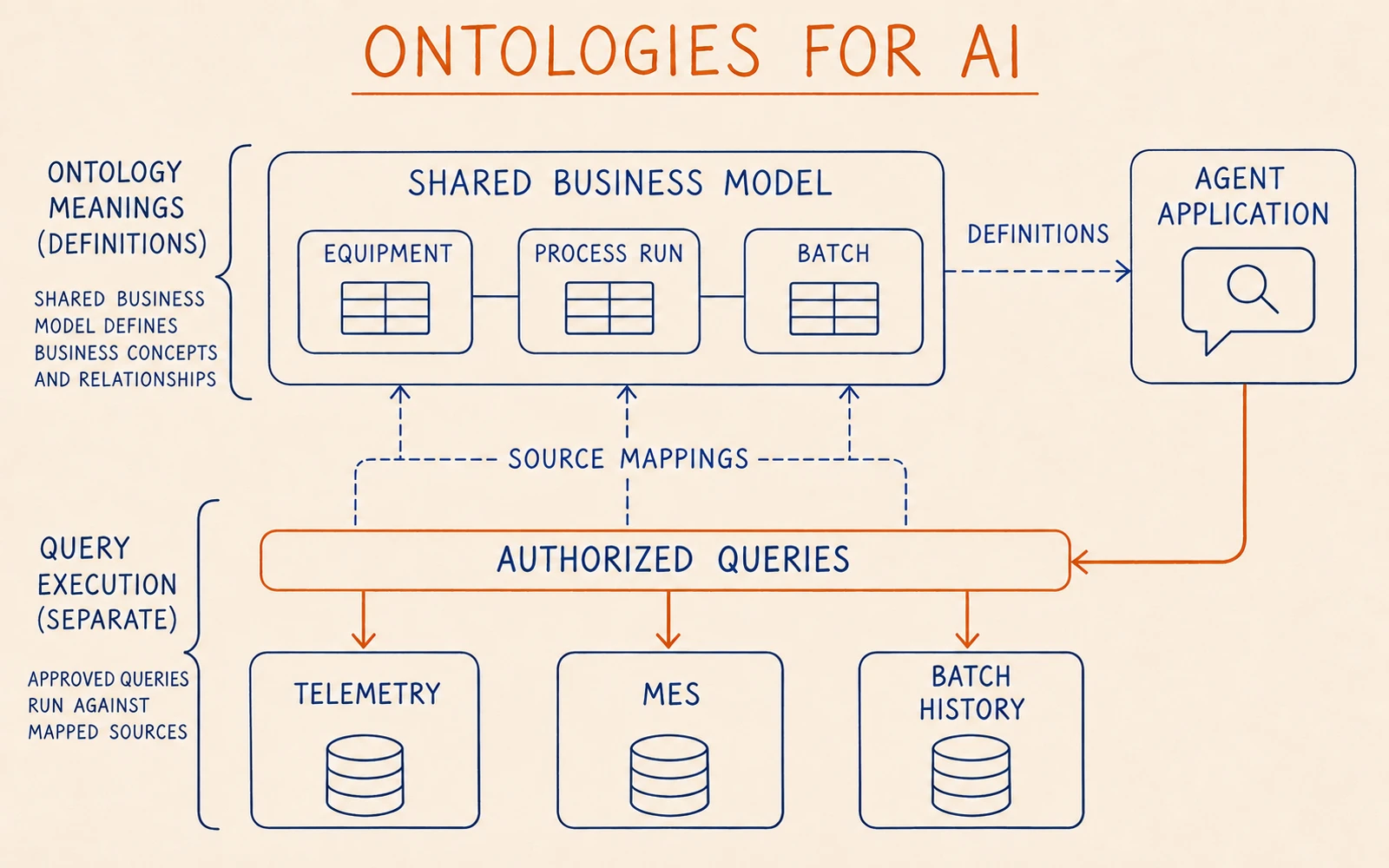
Learn when an ontology helps AI connect business concepts across systems, how it complements semantic models, and where its limits remain.
Data Architecture Data Engineering
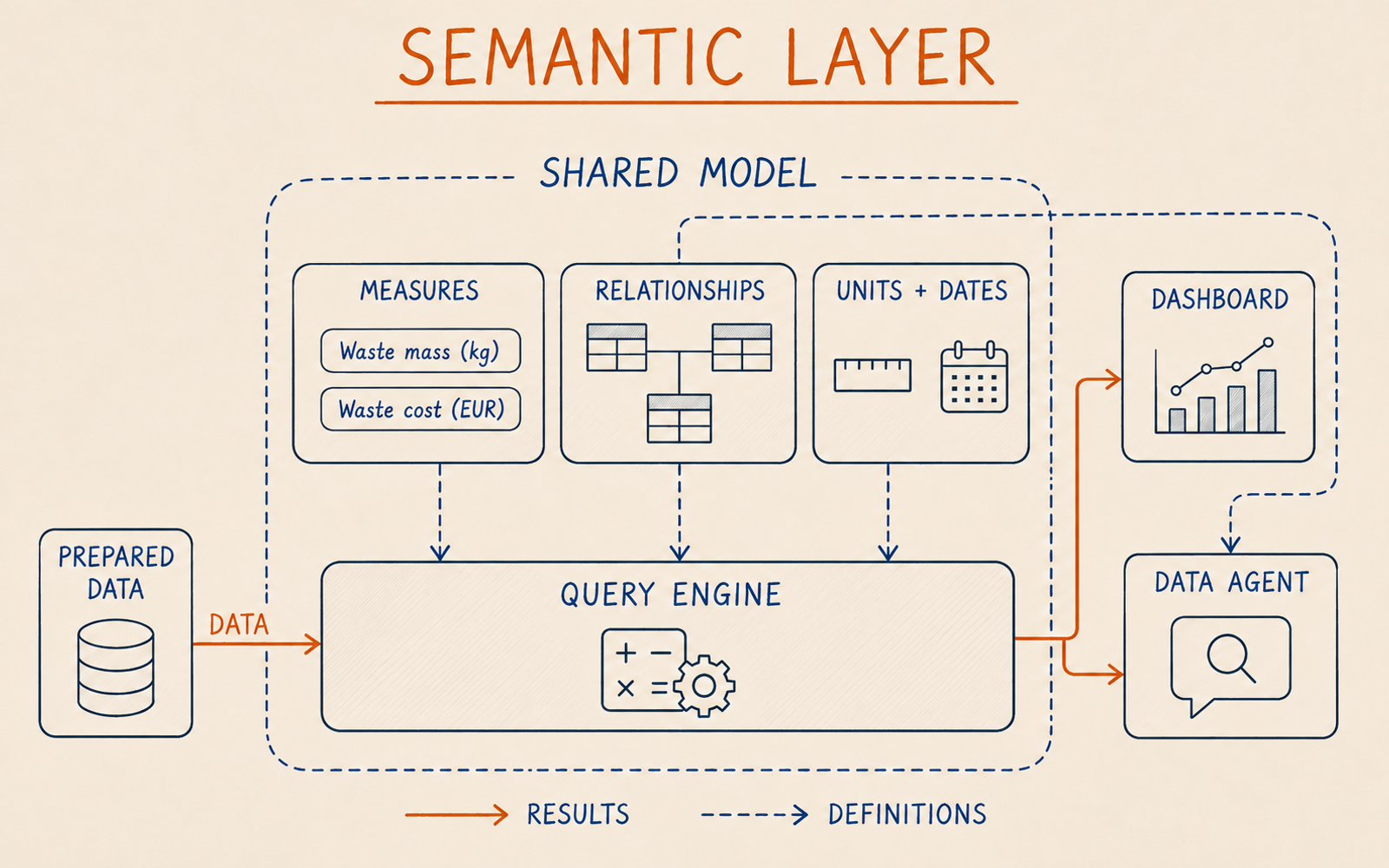
Learn how semantic layers give AI agents clear metrics and business context, and when a focused dashboard is a better fit than a conversational interface.
Data Architecture Data Engineering
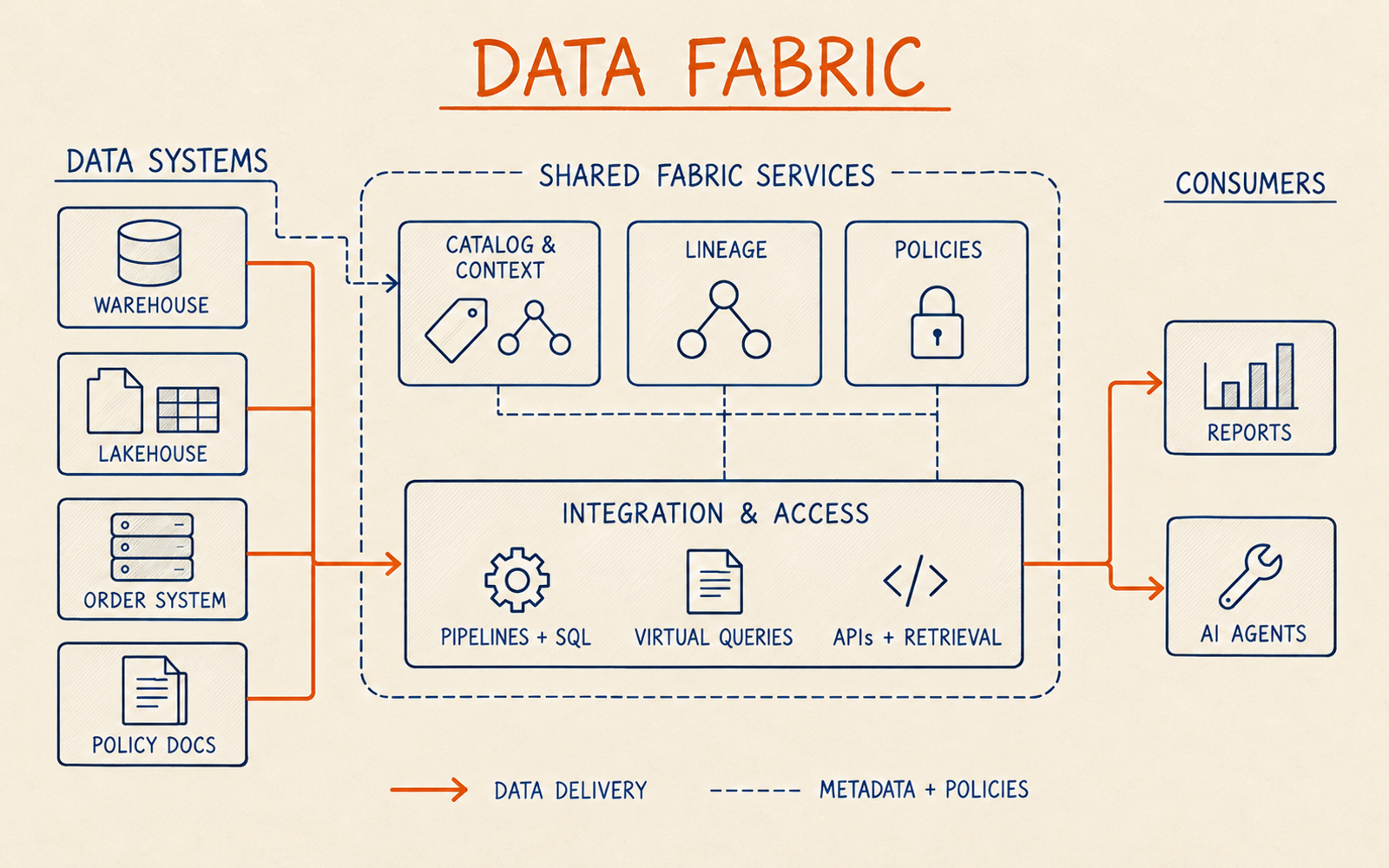
Explore data fabric architecture through MorrowBasket's reports and agents, and see how shared context and access controls support AI-ready data platforms.
Data Architecture Data Engineering
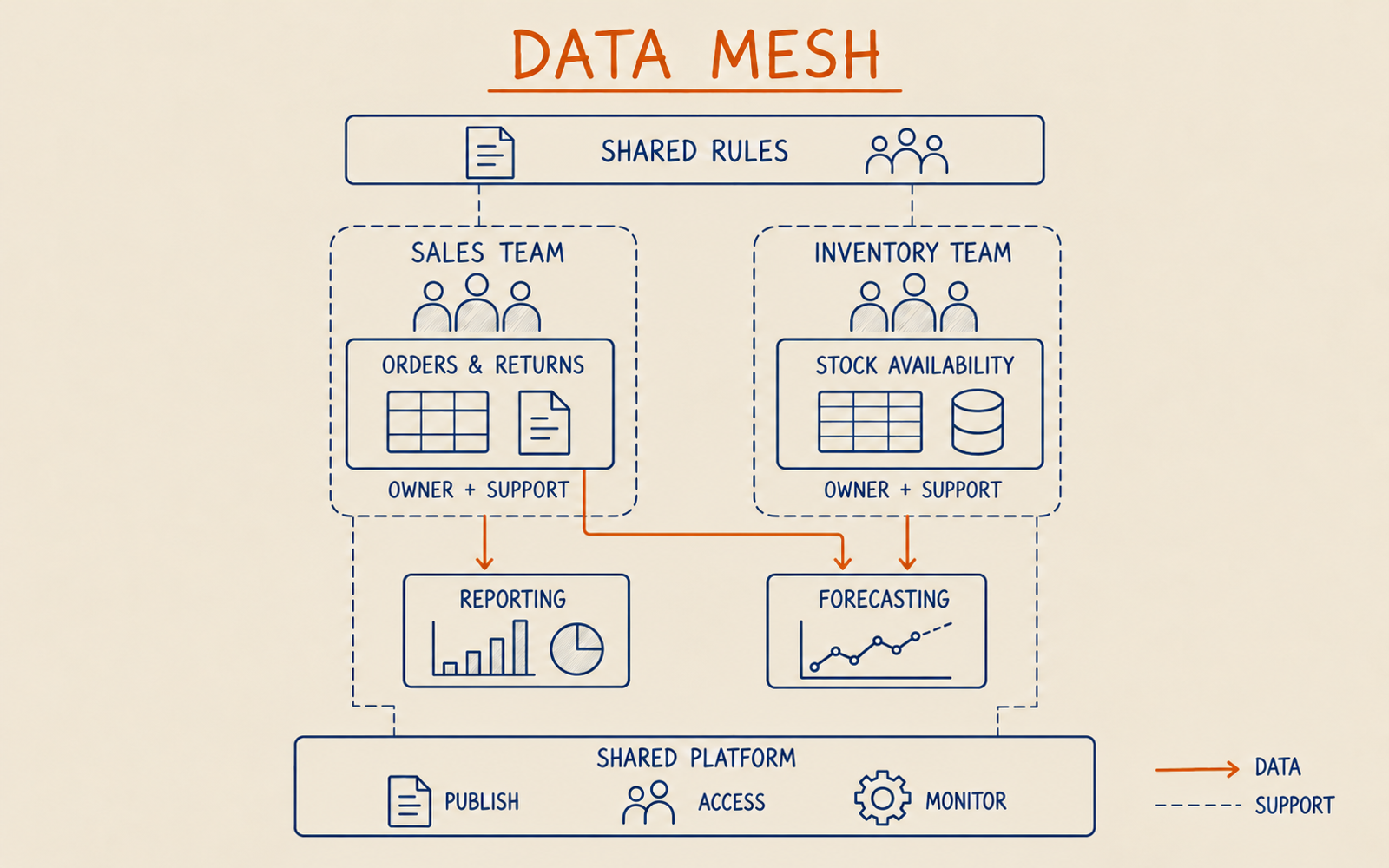
Explore data mesh through MorrowBasket's teams and learn how domain ownership, data products and shared governance support analytics and AI.
Data Architecture Data Engineering
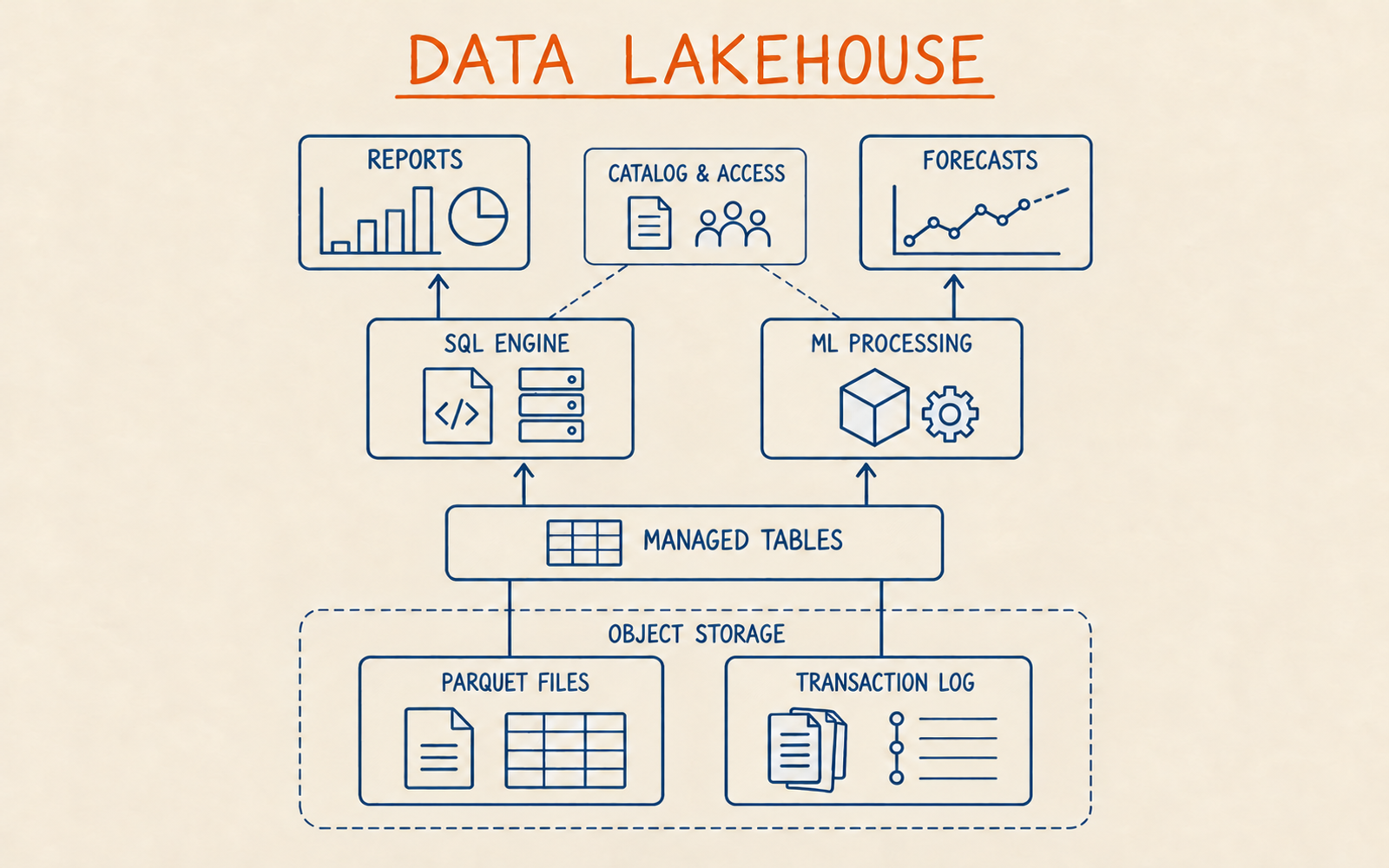
Explore how data lakehouse architecture adds reliable tables to a data lake, supports analytics and ML, and can replace a separate data warehouse.
Data Architecture Data Engineering
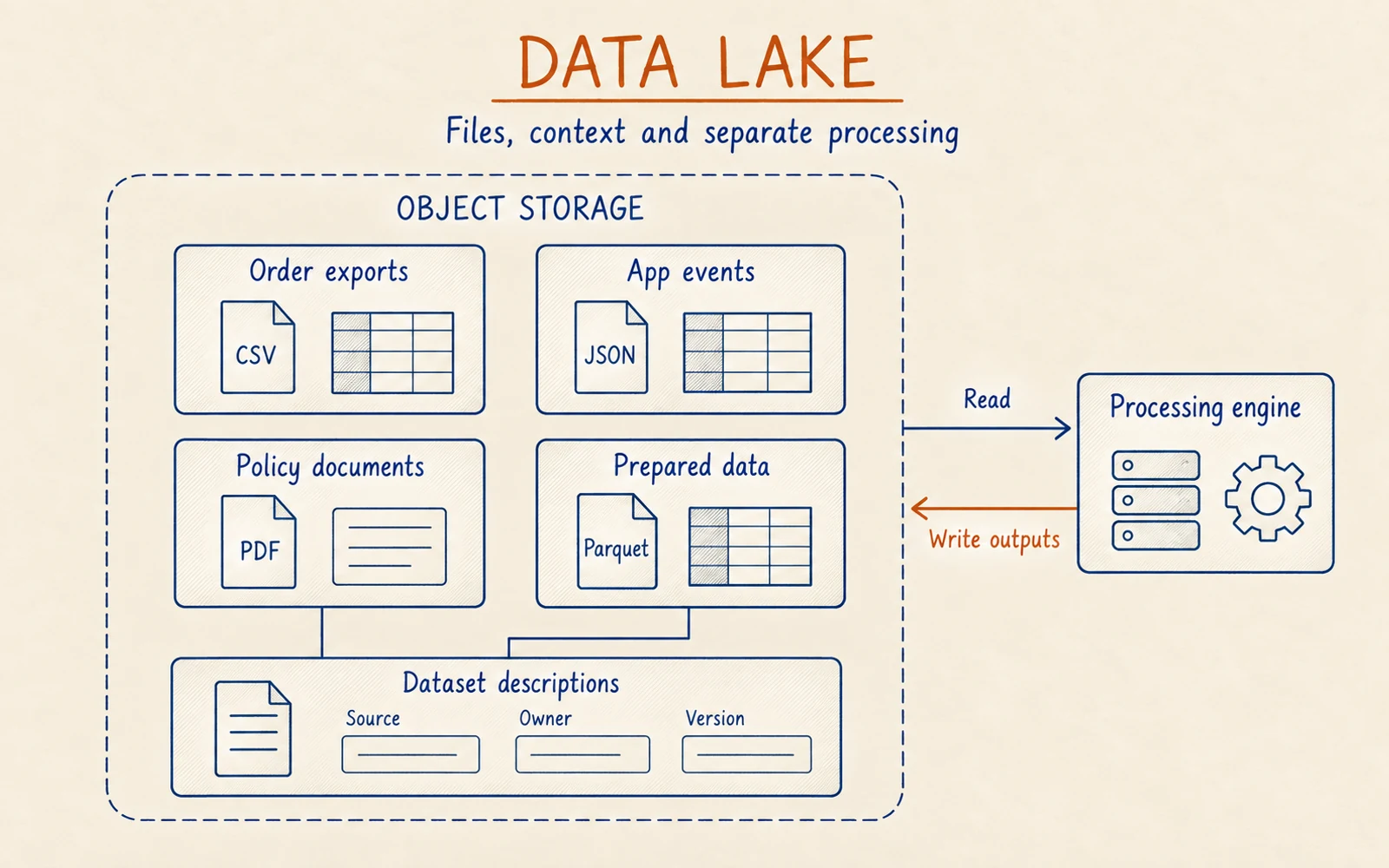
Explore data lake architecture through MorrowBasket's files, formats and processing, and learn what makes stored data useful for analytics and AI.
Data Architecture Data Engineering
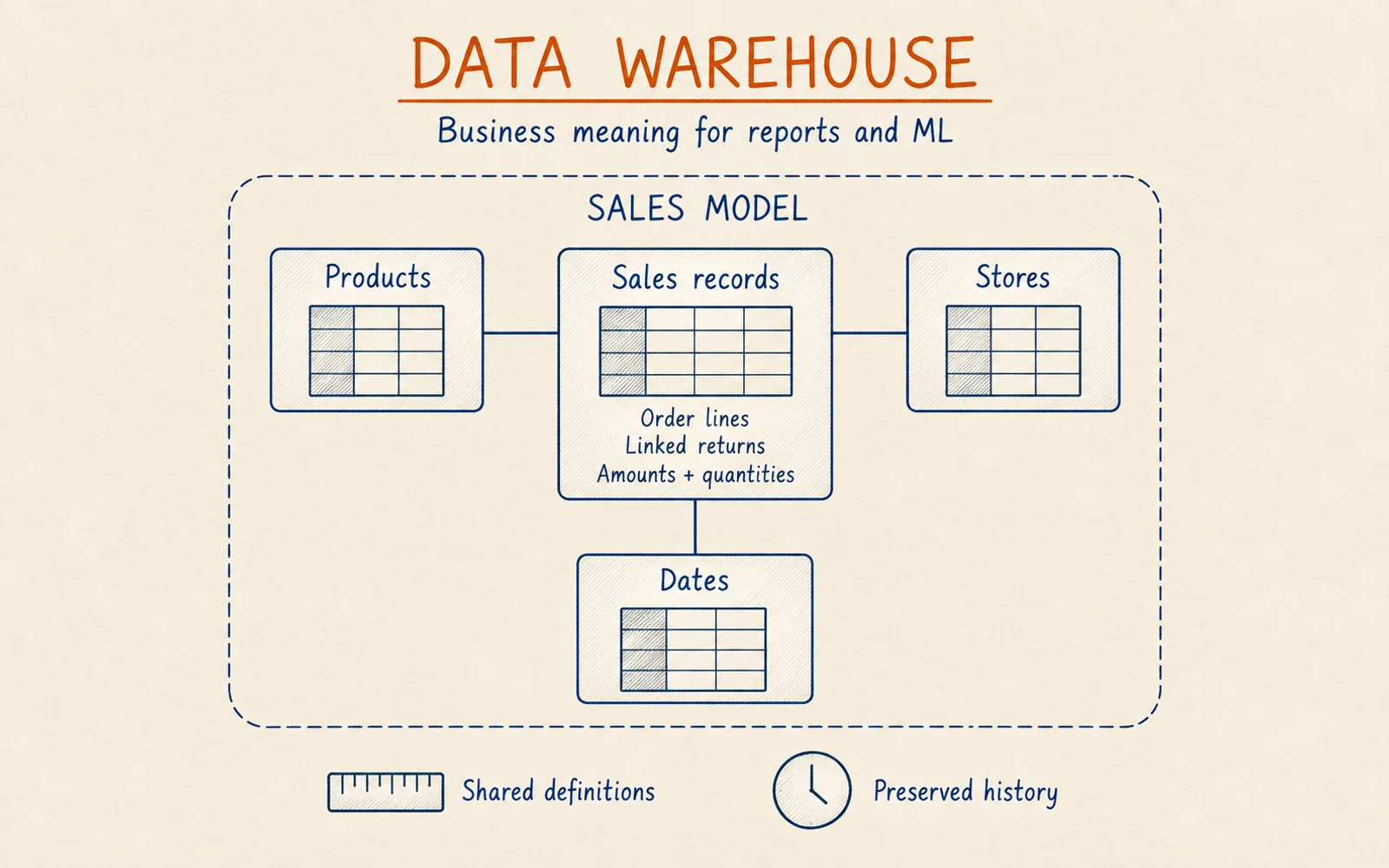
See how a data warehouse gives reports and AI consistent business data, where historical correctness matters, and when a warehouse is enough.
Data Architecture Data Engineering
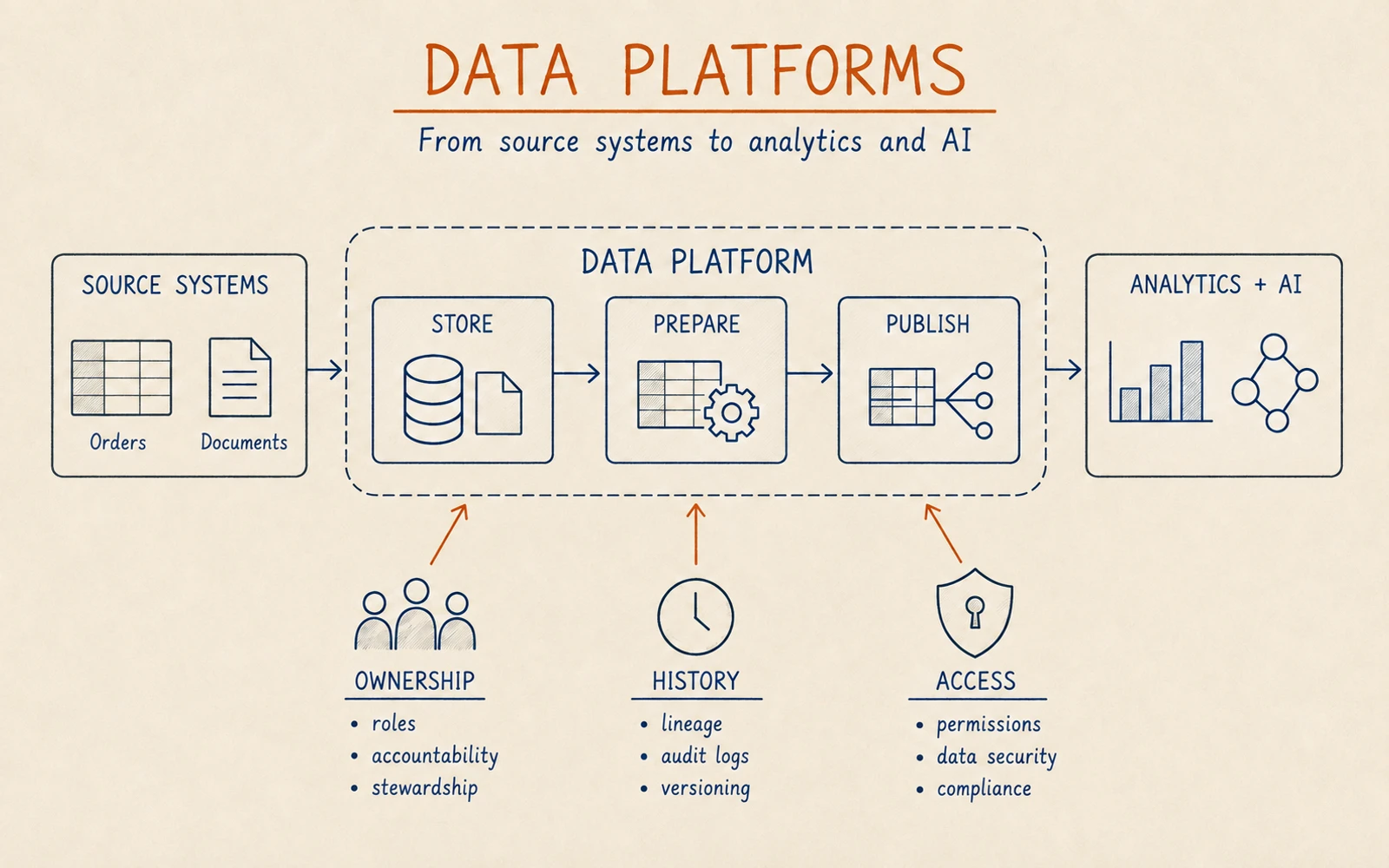
Understand warehouses, lakes, lakehouses, mesh and fabric through one business example, and learn what makes a data platform ready for AI.
Data Architecture Data Engineering
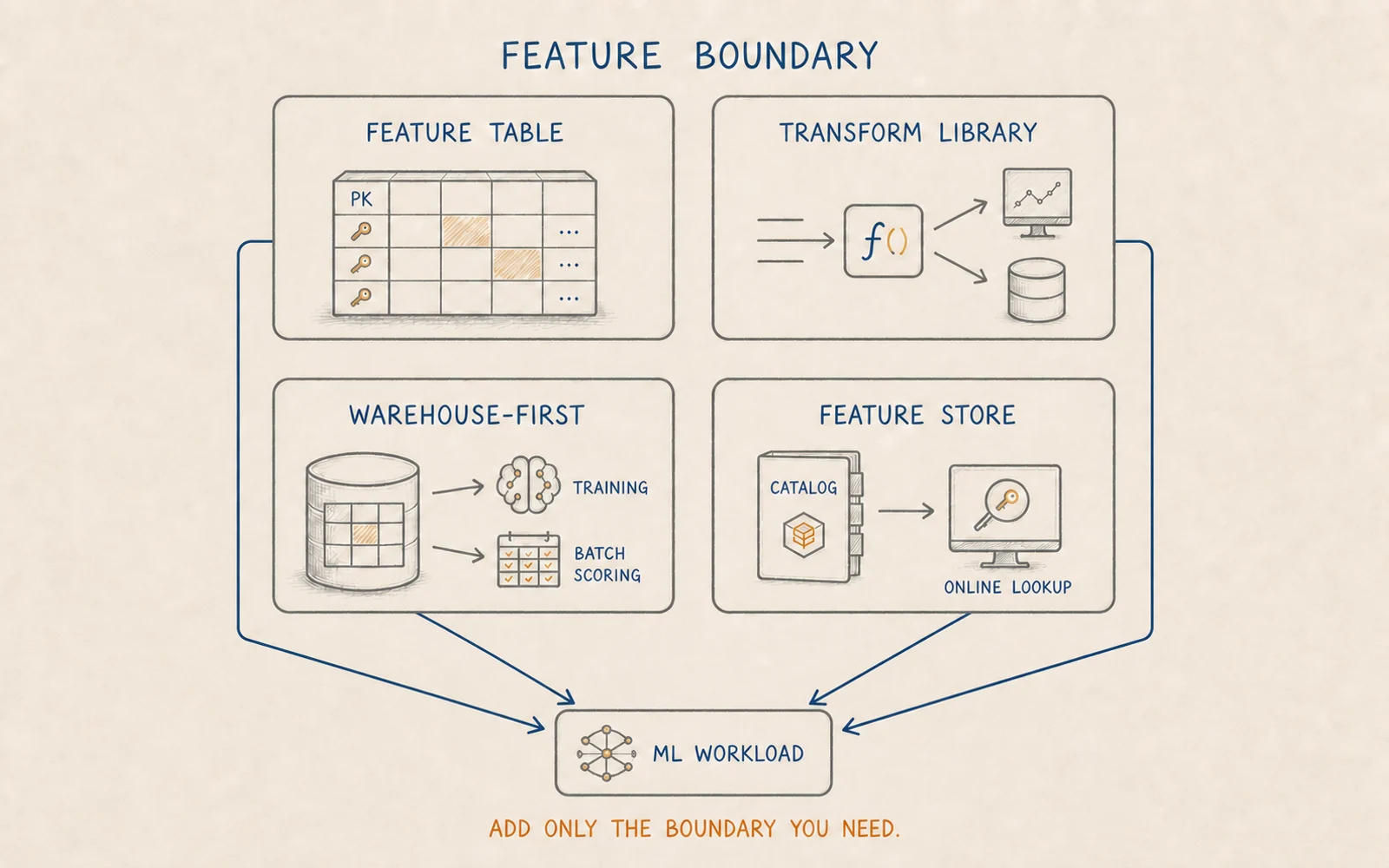
Feature store alternatives for production ML: when feature tables, shared transformation libraries or warehouse-first patterns are enough, and when a feature store earns its cost.
MLOps Data Engineering
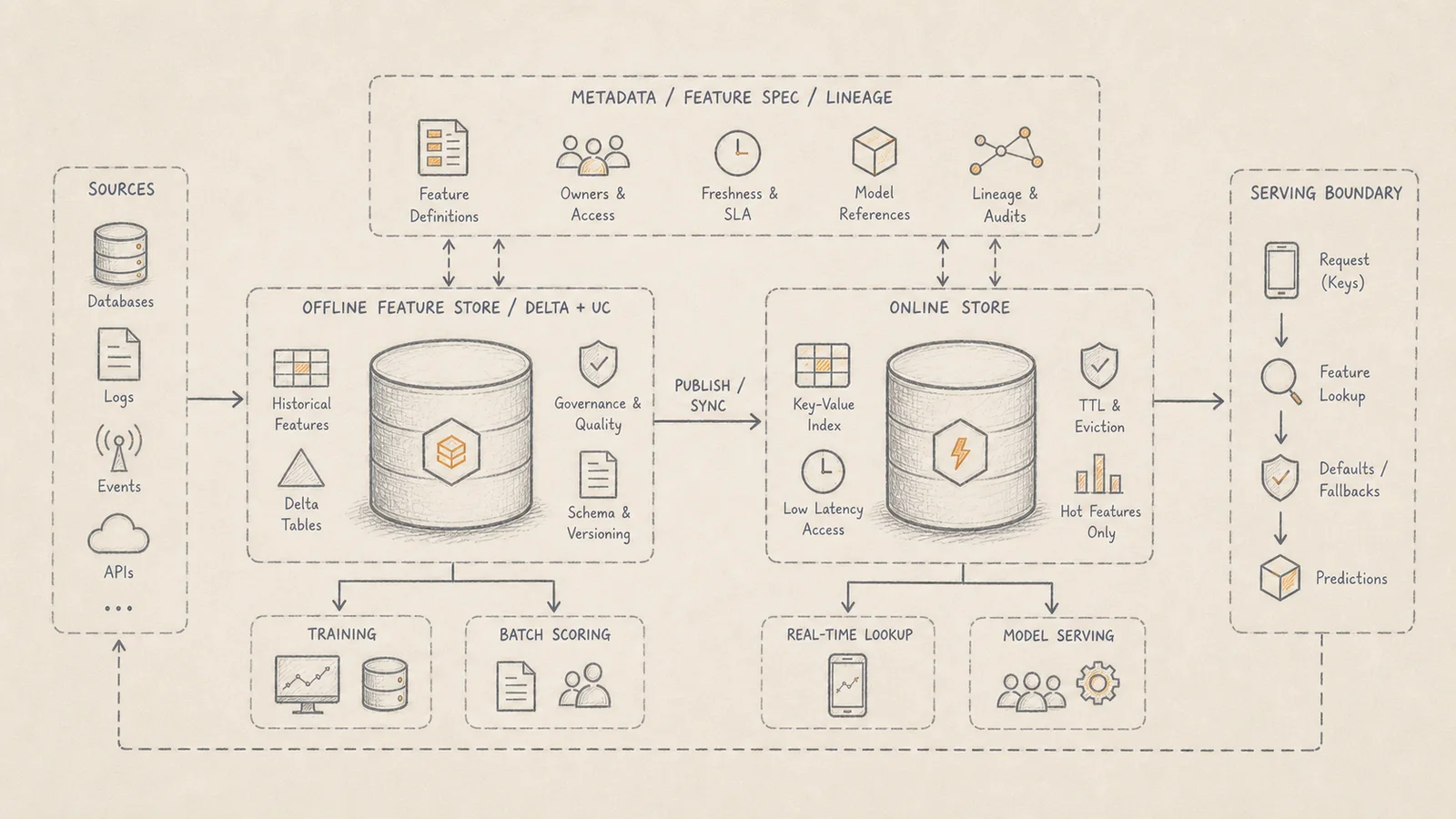
Design feature store architecture across offline feature stores, online lookup, metadata contracts and feature serving for production ML.
MLOps Data Engineering
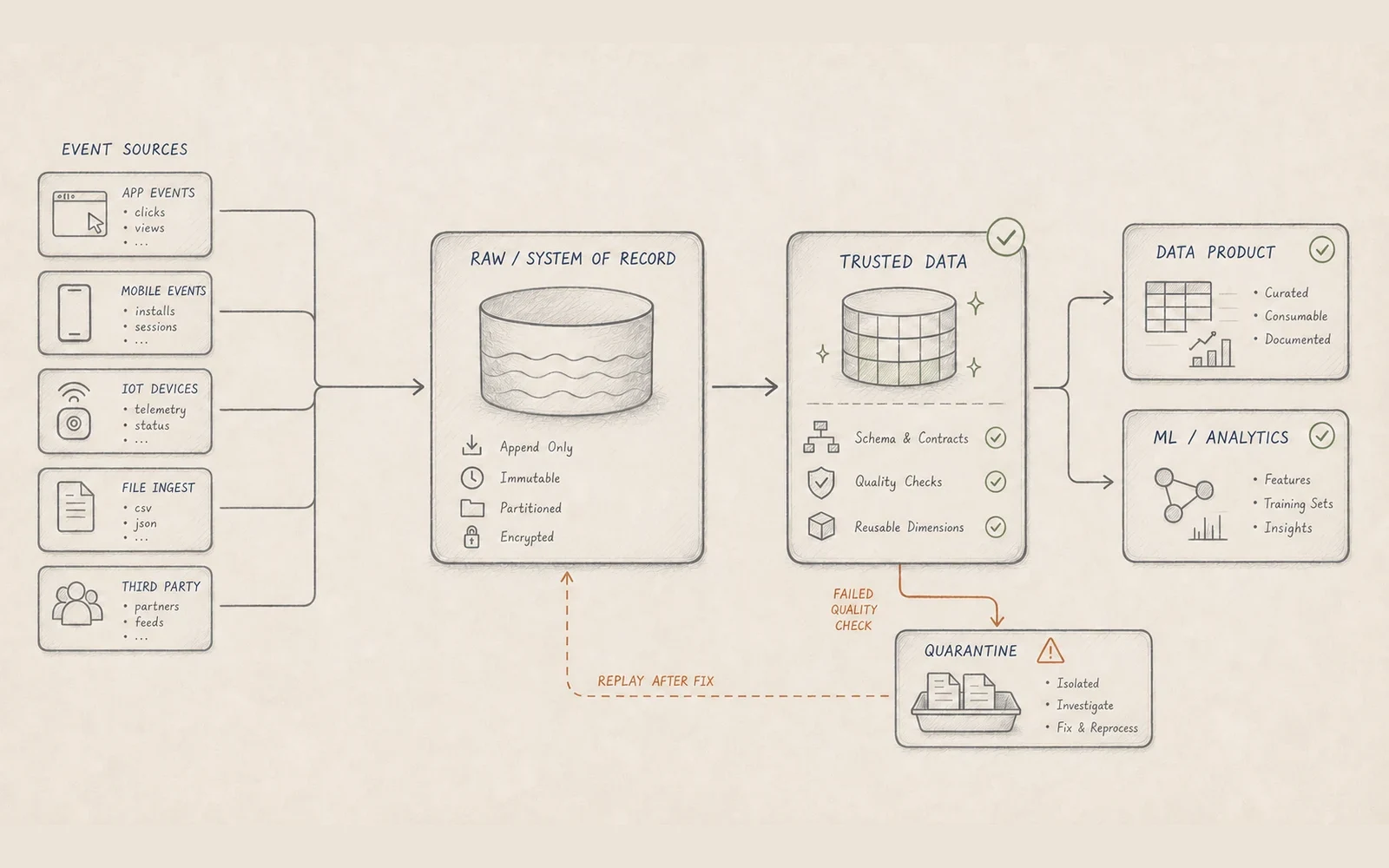
Medallion architecture for engineers: design raw data, trusted views and published data products with clear contracts, replay paths and ownership.
Data Engineering Databricks
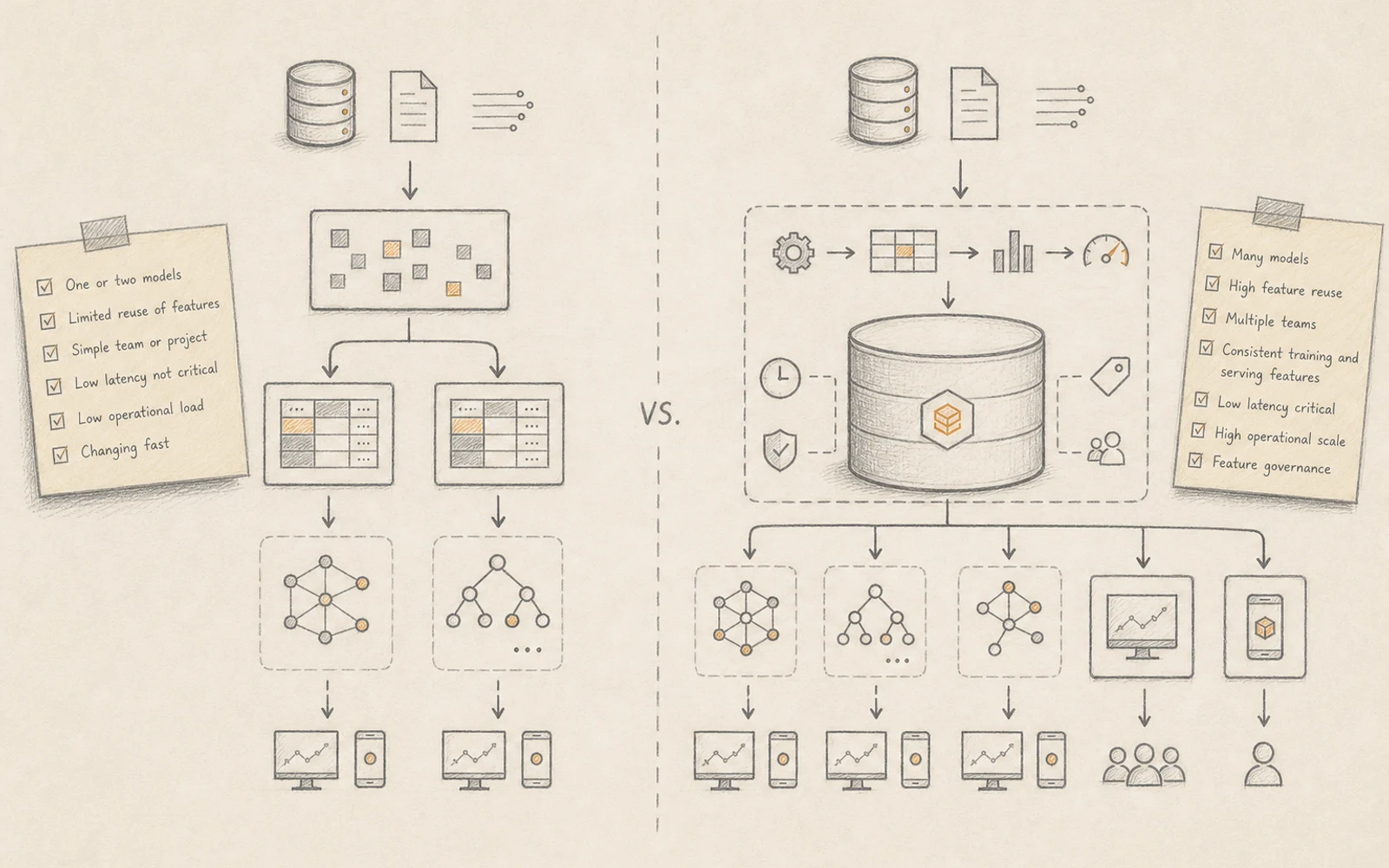
Learn what a feature store does, when ML teams need one, and when versioned feature tables or warehouse-first pipelines are enough.
MLOps Data Engineering